

A developing “super El Niño” could set the stage for a boom-or-bust winter when it comes to snow across the Washington, D.C. region, according to FOX 5 DC meteorologist Mike Thomas.
According to Thomas’ breakdown, Pacific Ocean temperatures have been rapidly warming, and forecast models indicate El Niño could strengthen significantly through the fall. For the Mid-Atlantic, strong El Niño winters generally bring milder-than-average temperatures but also an active, moisture-rich storm track. That combination makes snowfall particularly difficult to predict.
Thomas notes that strong El Niño patterns can produce frequent coastal storms and nor’easters, but because temperatures are often mild, many of those systems end up producing rain rather than snow. However, if one of those moisture-heavy storms lines up with a temporary push of cold air, the result can be a major snowstorm.
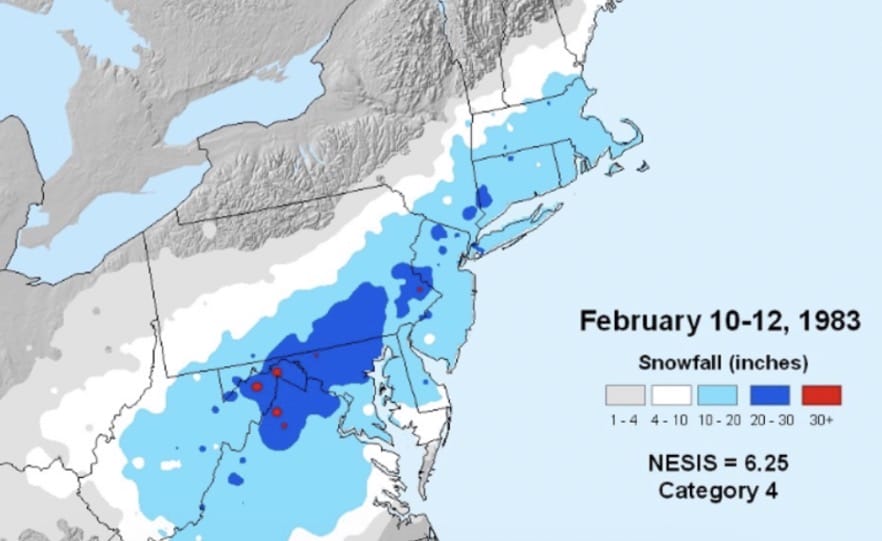
Past “super El Niño” winters show both ends of that spectrum. During the 1982-83 winter, D.C. recorded 27.6 inches of snow, including nearly 17 inches during the February 1983 blizzard. The 2015-16 winter was also unusually mild overall, but a January blizzard still dropped 18 inches at D.C.’s official measuring location and a record 29.2 inches in Baltimore.
The 1997-98 super El Niño produced the opposite result. Persistent warmth kept most storms as rain, and D.C. recorded just 0.1 inches of snow for the entire winter. That history is why Thomas describes the potential setup for winter 2026-27 as “boom-or-bust.”
A strong El Niño would likely provide plenty of moisture and opportunities for storms, but the window for temperatures cold enough to support snow could be limited. If the cold and moisture fail to overlap, the region could finish the winter with very little snow. If they align at the right time, however, one or two storms could account for most of the season’s snowfall and potentially become major events.
In other words, a warmer-than-average winter does not necessarily mean a snowstorm-free winter. The developing pattern could produce plenty of rain and little snow, or just a few opportunities for snow with the potential for one of them to be a blockbuster. His full breakdown of the super El Niño and what it means for fall and winter can be found here.
