

The City of Gaithersburg has officially kicked off construction of a new 65,000 SF municipal building at 12 S. Summit Ave., part of an effort to consolidate City operations into a unified campus in Olde Towne.
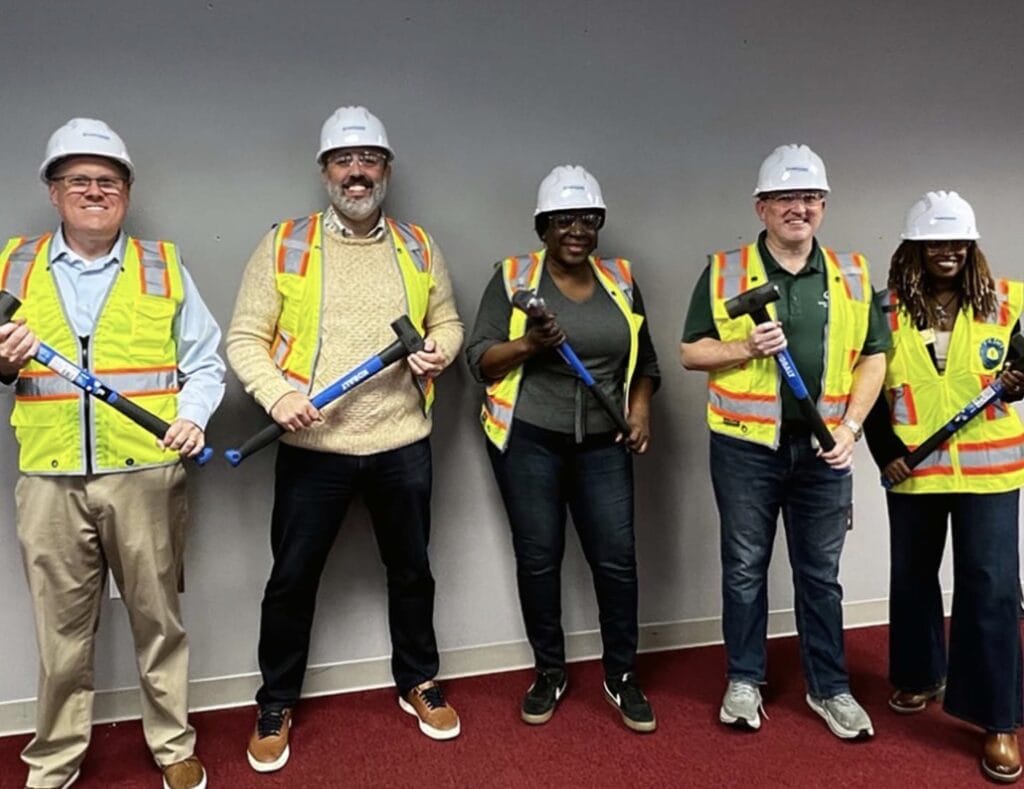
Mayor Jud Ashman, members of the City Council, City staff, and project partners marked the start of construction on October 23.
The new facility will be located alongside the police station and Council Chambers at 16 S. Summit Ave., creating a municipal campus that brings several City services together in one location. Between the two buildings, Gaithersburg says it will have invested more than $50 million in Olde Towne.
The new building is expected to house 158 employees across seven departments, consolidating operations that are currently spread across four buildings.
Plans include new offices and collaborative workspaces, upgraded accessibility features, modern security systems, enhanced technology, and an outdoor plaza featuring seating and public art. The building will also incorporate energy-efficient systems, improved ventilation, and other green building practices.
The City received more than $1 million in state funding for the project. “Today we celebrate a shared accomplishment and the beginning of an exciting transformation for our City organization,” Ashman said. “This project isn’t just about renovating a building. It’s about investing in our workforce, improving how we deliver services, and strengthening our connection to the residents of Gaithersburg.”
Gaithersburg’s current City Hall has served as the home of municipal offices for more than 60 years. The building was originally the home of Edward P. Schwartz, who created a nationally known peony garden on the property in 1913 that attracted visitors from around the country, including President Woodrow Wilson. The City purchased the estate in 1958 and converted the home into municipal offices.
According to the City, Gaithersburg’s growth and the need for a more modern and collaborative workplace led to plans for the new facility. Construction is expected to take approximately 14 months, with substantial completion and occupancy anticipated in early 2028.
