For nearly a decade, 67-year-old Jaime Posada of Potomac has defied the odds while living with Stage IV lung cancer, continuing to bike, hike, run, and enjoy the outdoors despite once being told he had just months to live. Now, following a devastating bicycle accident on the Capital Crescent Trail, the longtime Montgomery County resident is facing another life-threatening challenge, and his family is asking the community for help.
On September 5, 2026, Posada was riding his bicycle along the Capital Crescent Trail toward Georgetown when he was involved in an accident that left him with a severe traumatic brain injury, multiple brain bleeds, and numerous broken bones. He spent more than a month in intensive care, much of that time on a ventilator, before beginning a lengthy rehabilitation process.
His family has launched a GoFundMe campaign to help cover the costs of continued rehabilitation, round-the-clock caregiving, medical equipment, and modifications to his home as he works toward regaining his independence.
Posada has called Montgomery County home since his teenage years. He worked at Mitch and Bill’s Exxon as a teenager, graduated from Winston Churchill High School, and later attended American University. He and his wife, Lourdes, raised their two daughters Katalina and Tatiana in Rockville before moving to Potomac, where they currently reside. Lourdes has been the president of the Metropolitan Community Club (MCC of Montgomery County) since 2024.
His daughter Katalina describes him as someone who has never met a stranger, frequently striking up conversations with people while walking his dog, Teddy, through the community or visiting his favorite coffee shop in Potomac Village.
“If you’ve spent time in Potomac or Bethesda, you’ve probably met my dad,” she said. “He’s the man with the big smile and his dog Teddy, chatting with everyone at the coffee shop or on a hike. To my dad, there are no strangers, only friends he hasn’t met yet. Sit down next to him and he’ll treat you like family.”
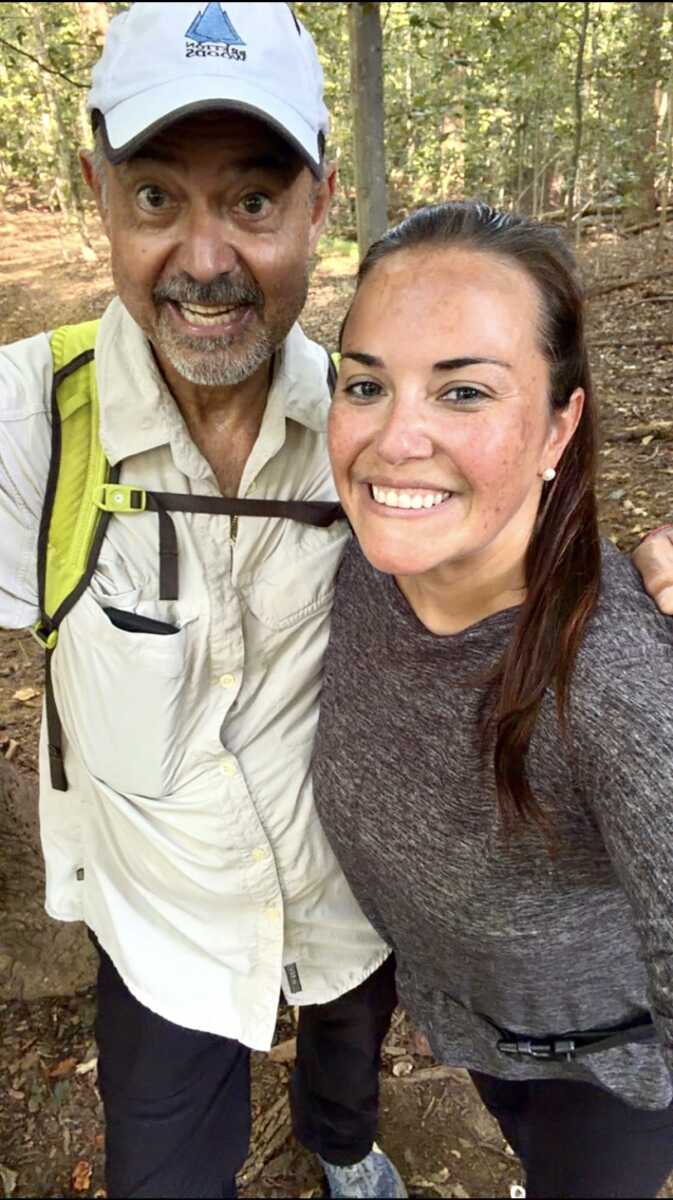
His love for the outdoors has been a defining part of his life. For years, he commuted into Washington, D.C., by bicycle along the Capital Crescent Trail, appreciating the scenery and quiet surroundings. He and Teddy regularly walked the Gold Mine Loop near Great Falls, an area that holds special meaning for the family because it is where Posada and his wife became engaged.
That same passion for cycling led him back to the Capital Crescent Trail on the morning of September 5, shortly after beginning a new drug trial for his lung cancer. According to Katalina, Posada was feeling energetic and hopeful when he headed out for what was supposed to be a light ride along a trail he had traveled thousands of times.
At approximately 10:30am, he was near mile 9.5 of the trail, heading toward Georgetown along the Potomac River. His daughter said that, according to a police report and witness account, he had passed a walker and a runner on the left before approaching another group of pedestrians. When members of that group moved toward the left side of the trail, she said, he swerved to avoid them and crashed.
A witness called 911, and a doctor who happened to be running nearby stopped to assist. Posada was reportedly unconscious for five to ten minutes before emergency responders transported him to George Washington University Hospital. His family initially had no idea what had happened. “We only found him because my sister checked his phone location,” Katalina recalled.
When they arrived at the hospital, the family learned that his injuries were life-threatening. Posada had suffered bleeding in multiple areas of his brain, a severe traumatic brain injury, and multiple fractures, including injuries to his ribs, collarbone, and hand. “They told us he was in respiratory distress and that we had to decide right then whether to put him on a breathing tube or let him pass,” Katalina said.
Over the following weeks, Posada underwent numerous procedures, including placement of a breathing tube, tracheostomy, and feeding tube. His condition was further complicated by type 1 diabetes, which he has lived with since the age of 23.
His family spent weeks navigating changing medical assessments, serious complications, and uncertainty about whether he would survive. “One day we were talking about palliative care. The next day we were talking about giving him a chance. We lived on that emotional roller coaster every single day,” Katalina said.
She credited Dr. Babak Sarani, Chief of Trauma at George Washington University Hospital, and the hospital’s ICU nursing staff with helping the family through the experience. “If it weren’t for the Chief of Trauma at GW Hospital, Dr Babak Sarani, I’m not sure we’d be talking to my dad today,” she said. “He gave us the facts, but he also gave us compassion and the hope to give my dad a chance.”
After more than five weeks in the hospital, Posada was transferred to Inova Mount Vernon’s rehabilitation unit on October 14. By that time, he had lost 23 pounds, required oxygen support and feeding through a tube, and could not sit up independently.
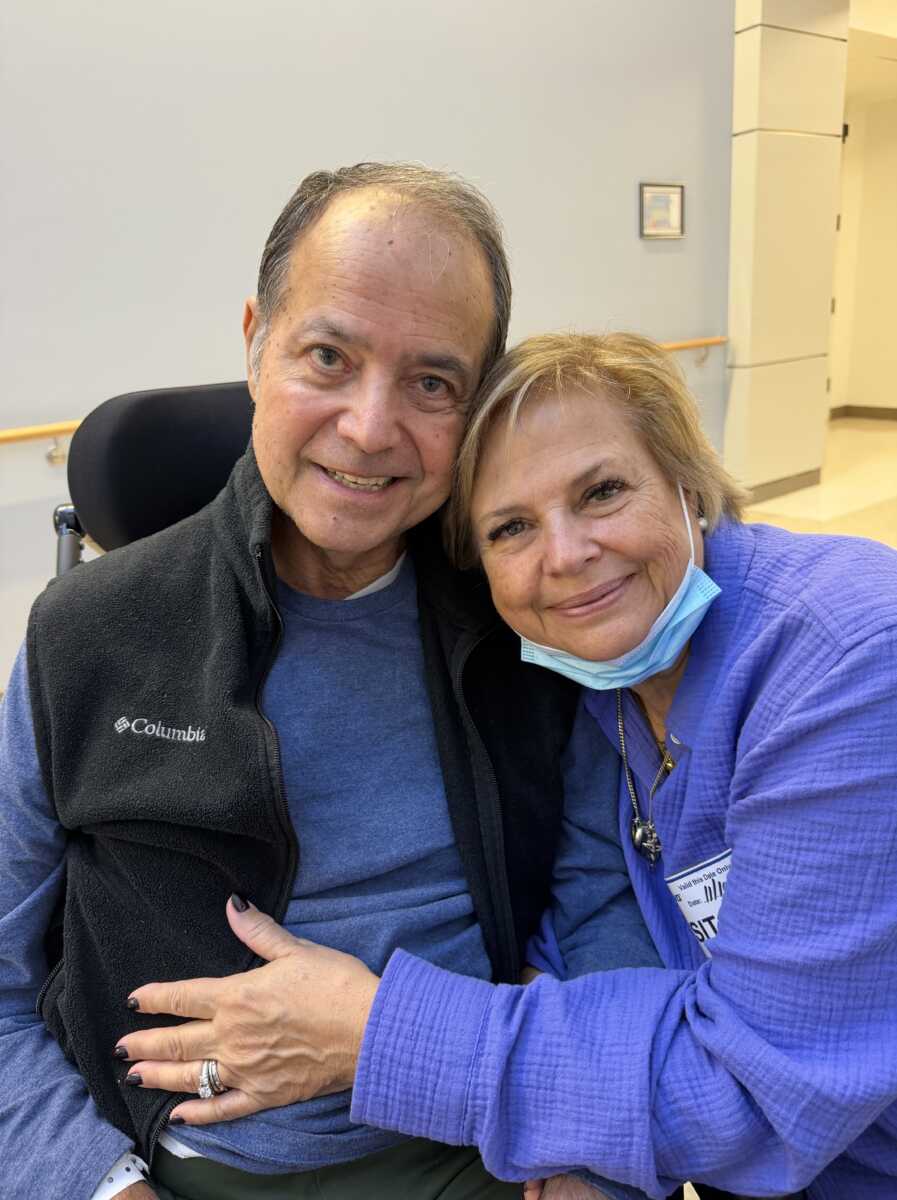
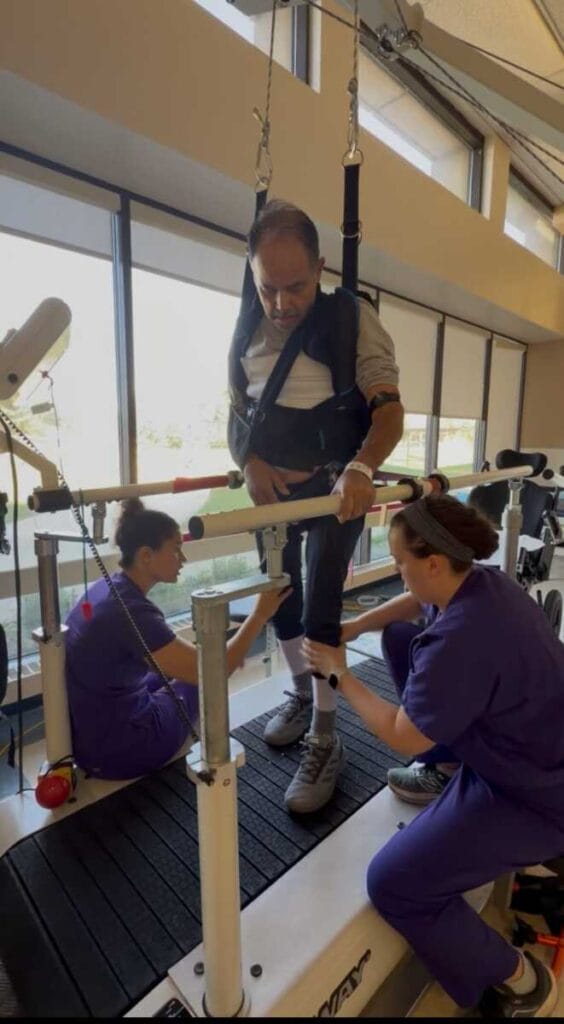
Since then, his family says, he has made significant progress. His tracheostomy has been removed, he is breathing independently, and he has begun eating again. He can sit up on his own and has taken steps with support from a therapist. He has also been able to hug his grandchildren again.
“There were days we didn’t know if he would ever wake up, so every one of these moments feels like a miracle,” Katalina said. Despite that progress, Posada still requires substantial assistance. His brain injury has affected his balance, mobility, speech, coordination, and cognitive abilities. According to his family, he currently needs two people to help transfer him between his bed, a chair, and the bathroom.
Katalina said insurance limitations could force him to leave inpatient rehabilitation before he is fully ready to return home. The family is preparing for the possibility of round-the-clock caregiving and significant changes to their home, including installation of a stair chair lift and the purchase of specialized medical equipment. He will also need continued physical, occupational, and speech therapy, some of which may not be covered by insurance.
The recovery is particularly challenging given Posada’s medical history, which includes nearly a decade of living with Stage IV lung cancer. His cancer diagnosis came unexpectedly in late 2016 after he tripped during a run and fractured three ribs. An X-ray revealed a spot on his lung, leading to further testing and a diagnosis of Stage IV ALK-positive non-small cell lung cancer.
Although he had never smoked and was an avid cyclist who regularly completed rides of 80 to 100 miles, one doctor told him he had only two to six months to live, according to Katalina.
Posada sought treatment with Dr. Stephen Liu and the team at MedStar Georgetown’s Lombardi Comprehensive Cancer Center. In March 2017, he began targeted therapy, and within three months, his tumors had shrunk and the lesions in his brain had disappeared.
His health challenges did not end there. He suffered a stroke in 2018 and was diagnosed with bladder cancer in 2019, recovering from both while continuing to maintain an active lifestyle.
Months after his lung cancer diagnosis, he ran the Cherry Blossom 10 Miler. Over the years, he continued cycling, hiking, paddleboarding, kayaking, fishing, and skiing. “His attitude has always been that the disease doesn’t get to decide how he lives,” his daughter said.
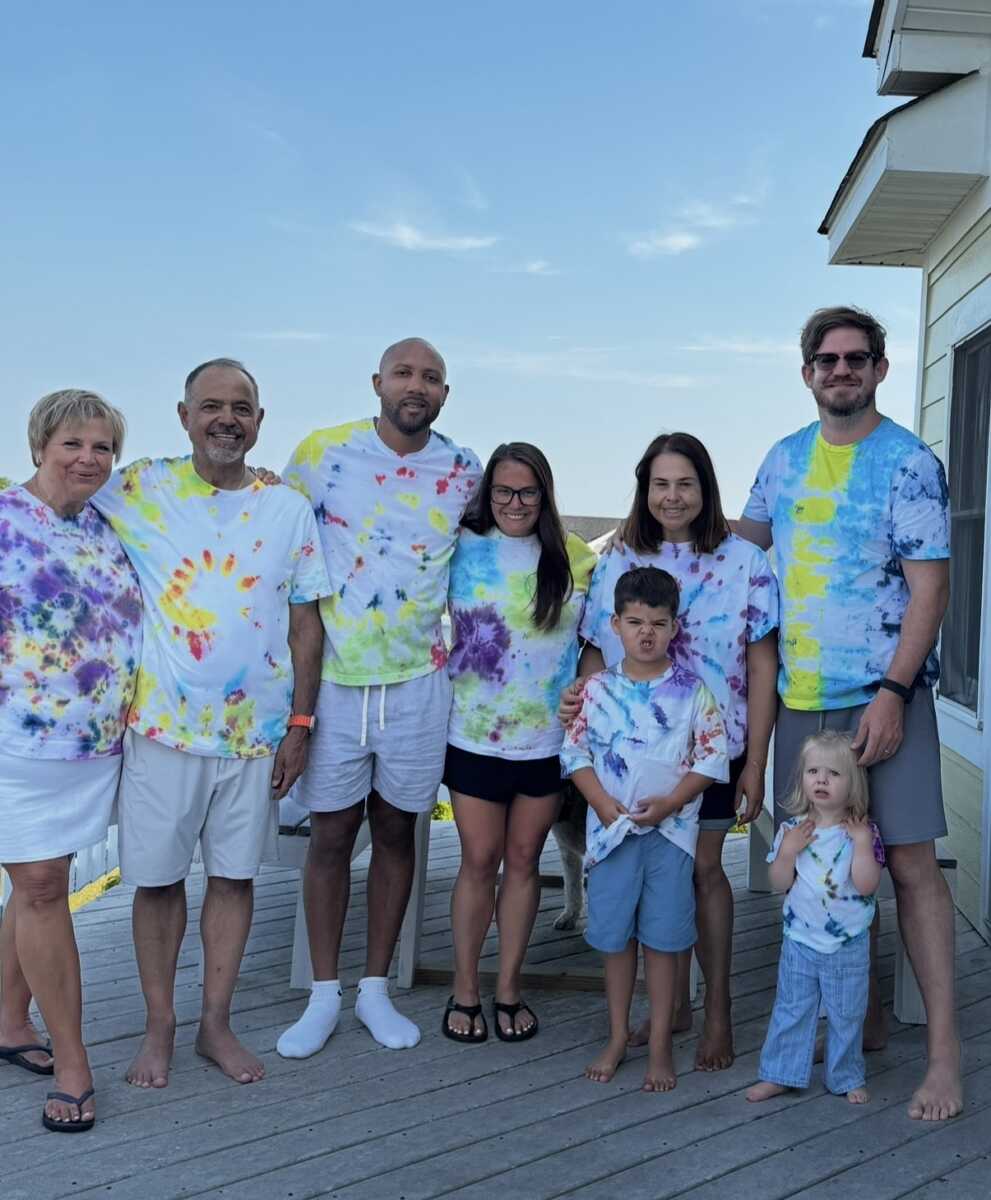
Posada eventually shared his cancer journey at the Lombardi Gala to help raise money for cancer research. His family also established the #JaimeStrong campaign, organizing community fundraisers and creating annual T-shirts featuring his favorite outdoor activities.
Through events at local gyms, restaurants including Fontina Grille, and support from friends and neighbors, the campaign has raised more than $42,000 for the LUNGevity Foundation and ALK-positive lung cancer research. Posada has also participated in the Tour de Cure to support type 1 diabetes research.
For years, he has been the person raising money and helping others. Now, his family hopes the community will support him as he faces his own recovery. A longtime member of St. Raphael’s Church, Posada has received support from friends, neighbors, and members of the church community since the accident. His wife, Lourdes, and daughters have spent each day advocating for his medical care while balancing the responsibilities of family life.
His daughter Katalina also hopes the accident will bring greater awareness to safety and maintenance along the Capital Crescent Trail. She expressed concern about deteriorating trail conditions and overgrown vegetation that can narrow sections of the path. The family is encouraging cyclists, runners, and walkers to remain aware of one another, stay to the right, and announce when passing. “We don’t want this to happen to another family,” she said. “We’re asking for better upkeep of the trail, and we’re asking everyone who uses it to share it with care.”
The family’s GoFundMe will help pay for home modifications, medical supplies, specialized equipment, caregiving, and additional rehabilitation services as Posada continues his recovery. Katalina said that while the road ahead remains uncertain, the family continues to draw strength from his determination and the community that has surrounded them.
“He has beaten the odds again and again. He was given two to six months to live and is still here nearly ten years later. He came back from a stroke and from bladder cancer. We truly believe this is not his final ride.”
Those interested in supporting Posada’s recovery can visit the family’s GoFundMe campaign at https://www.gofundme.com/f/support-jaimes-recovery-at-home. The family also welcomes prayers, encouraging messages, and support for those caring for loved ones facing serious medical challenges. “To everyone in Montgomery County who has prayed, brought a meal, or simply asked about him: thank you. You are part of his recovery. #JaimeStrong”