

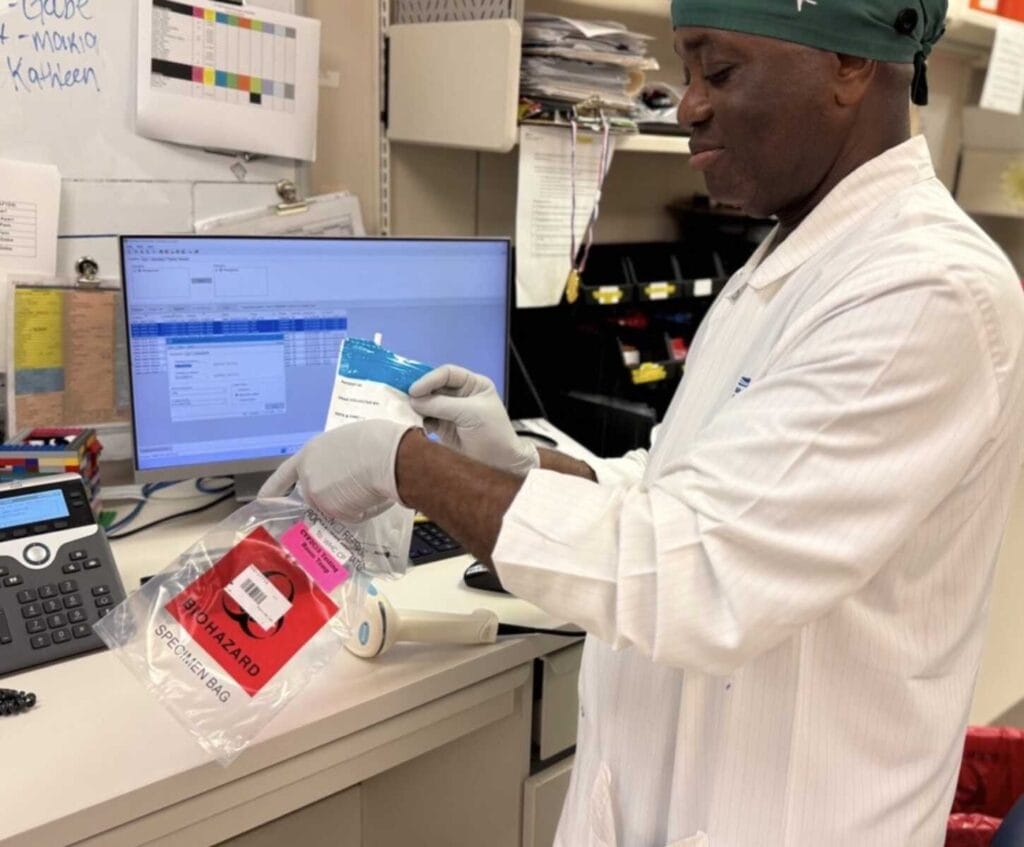
MedStar Montgomery Medical Center in Olney is now offering same-day genetic testing that helps doctors determine which medications may be most effective in preventing a second stroke.
The hospital is the latest to join MedStar Health’s pharmacogenomics program, which uses a patient’s genetic information to guide treatment decisions. MedStar is among the first hospital systems in the country to implement the approach, which can deliver results in as little as five hours, allowing physicians to adjust medications before patients leave the hospital.
The program initially launched at MedStar Georgetown University Hospital, MedStar Washington Hospital Center, and MedStar Franklin Square Medical Center before expanding to MedStar Montgomery.
The testing is particularly useful because certain genetic variations can affect how well patients respond to clopidogrel, a commonly prescribed medication used to help prevent blood clots. By identifying these variations, doctors can select medications better suited to individual patients, potentially reducing their risk of another stroke.
According to MedStar Health, 97% of patients at its initial three hospitals who experienced a clot-related stroke and had genetic testing ordered received their results before discharge. Clinicians aligned medication selections with genetic testing results in more than 90% of cases.
The findings were detailed in a study published in the medical journal Clinical Pharmacology & Therapeutics.
“This work shows how findings from a cutting-edge clinical trial can be translated into everyday patient care,” said Andrew Stemer, MD, director of stroke neurology for MedStar Georgetown University Hospital. “It creates a real path forward for using genetic testing to improve stroke treatment.”
The program builds on findings from the 2021 CHANCE-2 clinical trial, which demonstrated how genetic differences can help determine which medications are better suited to preventing additional strokes.
“Now, instead of a one-size-fits-all approach to stroke medication, testing allows us to quickly choose the most effective and targeted treatment,” said Sandra M. Swain, MD, vice president of MedStar Genetic Medicine. “This changes how we care for people.”
With the expansion to MedStar Montgomery Medical Center, patients receiving stroke care in Olney now have access to the same testing technology already being used at several of MedStar’s larger stroke centers in the Washington and Baltimore regions.
