

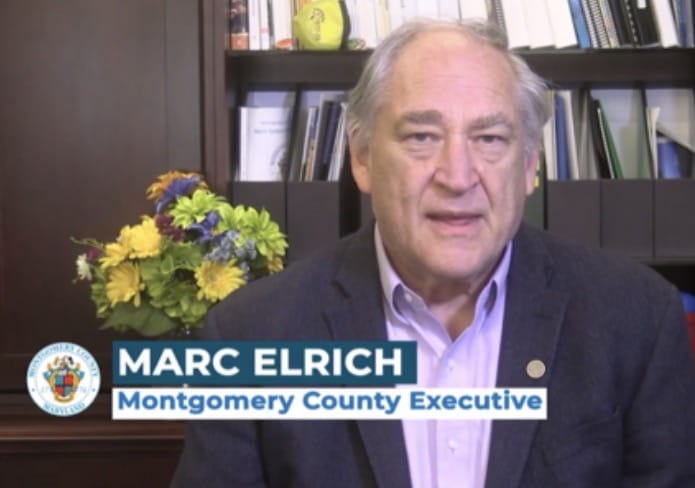
Montgomery County Executive Marc Elrich is criticizing the County Council’s decision not to fully fund Montgomery County Public Schools’ Fiscal Year 2027 budget request, arguing the move forced difficult reductions that will impact employees and create financial challenges for years to come.
In this week’s Montgomery Update, Elrich addressed the MCPS budget approved Thursday by the Board of Education, which closed a nearly $36 million gap after the County Council provided less funding than school leaders had requested.
The adopted budget includes the elimination of 415 positions. While some of those positions were vacant or newly created, most are currently filled and will result in layoffs. Board members said they targeted reductions in areas they believed would have the least impact on classrooms and student services.
According to information presented to the Board of Education, some of the largest reductions include $13.7 million in special education, $9 million in student personnel services, $6.3 million in textbooks and instructional supplies, $3.1 million in transportation, and $23.9 million in savings from reduced fixed charges.
Among the positions originally included for elimination were 12 secondary literacy specialists, 28 security assistants, and 118 special education resource teachers. However, during its final budget deliberations, the board restored several school-based positions that members said directly support students and staff, including 15 high school staff development teachers, 18 school psychologists, and 26.7 college and career navigator positions.
Elrich said he wished the reductions had not been necessary and argued they could have been avoided had the Council adopted the property tax increase included in his proposed budget. “I wish these reductions had not been needed, but the Council did not want to follow my fiscal plan for a modest property tax increase to fully fund the MCPS budget request,” Elrich said.
The county executive used the budget discussion to renew his long-running criticism of Montgomery County’s tax structure, arguing that commercial property owners are not contributing enough compared to residential taxpayers.
Elrich pointed to tax systems used in Washington, D.C., and Northern Virginia that allow local governments to generate more revenue from commercial properties. He also highlighted previous efforts to create special taxing districts and what he described as unsuccessful attempts to secure support from both the County Council and state lawmakers for those proposals.
“The Council has repeatedly reduced taxes on developers in its race to the bottom,” Elrich said, arguing that development continues to occur in jurisdictions with higher commercial property taxes.
Elrich also warned that the current budget situation is not a one-year challenge. He noted that MCPS relied on one-time funding sources to help balance its Fiscal Year 2027 budget, meaning the school system could begin next year facing another budget shortfall before any new spending decisions are made.
“The other thing I want people to understand is that this isn’t a one-time problem,” Elrich said. “Because MCPS had to use one-time money to balance this year’s budget, they’re already starting next year in a hole.”
The county executive also emphasized the broader economic impact of school funding decisions, noting that more than 70% of MCPS employees live in Montgomery County. “More than 70% of MCPS employees live right here in Montgomery County,” Elrich said. “They pay taxes here. They shop here. They are our neighbors.”
Elrich said maintaining competitive salaries remains essential for retaining educators, particularly as other Maryland school systems have increased compensation under the Blueprint for Maryland’s Future education reforms. He noted that while Montgomery County historically offered the highest teacher salaries in the state, other jurisdictions have become increasingly competitive despite Montgomery County’s higher cost of living.
Concluding his remarks, Elrich said he plans to continue advocating for changes to the county’s tax structure and increased education funding, arguing that students, educators, and the broader community deserve greater long-term financial support.
“This entire situation is a shame because the people running our schools and teaching our kids deserve better than having to justify their value every single budget season,” Elrich said.
