

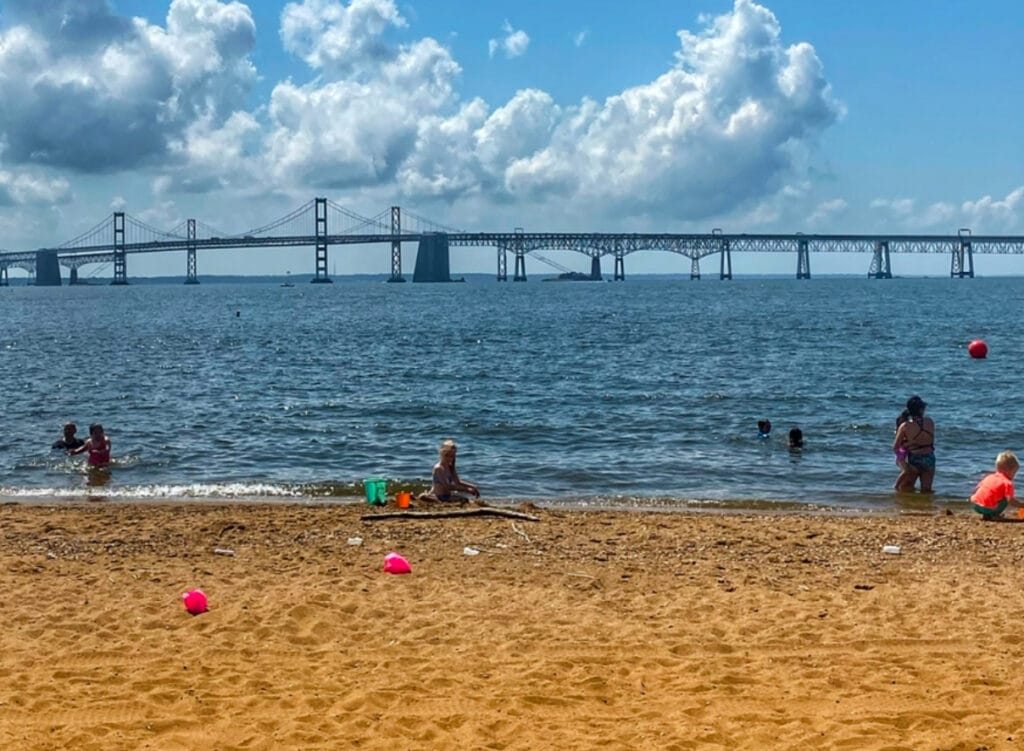
For many Marylanders, the Chesapeake Bay Bridge is simply the gateway to Ocean City and the Eastern Shore. But for countless others, crossing the bridge is anything but routine.
Often referred to as the “Scariest Bridge in America,” the William Preston Lane Jr. Memorial Bay Bridge continues to earn national attention for its imposing size, dizzying height, and the anxiety it causes many drivers. At the same time, Maryland is moving forward with major safety investments designed to better protect the aging structure for decades to come.
According to the Maryland Transportation Authority (MDTA), the Bay Bridge carries US 50/301 across the Chesapeake Bay, connecting the Baltimore, Annapolis, and Washington, D.C. regions with Maryland’s Eastern Shore. Stretching approximately 4.3 miles, the twin spans are among the world’s longest and most scenic over-water bridges.
The original eastbound span opened in July 1952, while the westbound span followed in June 1973. During periods of heavy beach traffic, one lane of the westbound bridge is reversed to accommodate additional eastbound vehicles.
The bridge’s reputation as one of the nation’s most intimidating drives stems from several factors, including its nearly 200-foot height in some sections, narrow travel lanes, frequent high winds, and long stretches over open water. An episode of Inside Edition famously dubbed it the “Scariest Bridge in America,” featuring drivers who experienced panic attacks while attempting the crossing. For those unable to make the trip themselves, a private service even offers to drive vehicles across the bridge.
Traffic volumes only add to the experience. The bridge typically carries between 20 million and 30 million vehicles each year, with traffic surging during the summer. Previous MDTA data showed summer weekend traffic can be more than 70 percent higher than weekday volumes, while some summer Saturdays have exceeded 100,000 crossings.
The bridge has also drawn increased attention following the collapse of Baltimore’s Francis Scott Key Bridge in March 2024. In the aftermath, questions were raised nationwide about the vulnerability of older bridges to modern cargo ships. Sky News described the Bay Bridge as a potential “sitting duck,” noting that the bridge was designed long before today’s massive container vessels became commonplace.
In response to recommendations from the National Transportation Safety Board (NTSB), Maryland is investing approximately $160 million in new safety improvements for the Bay Bridge.
Short-term measures being evaluated include enhanced communication between vessel pilots, reduced ship speeds in the navigation channel, and the possibility of temporarily pausing bridge traffic while particularly large ships pass beneath the structure.
Long-term plans call for the installation of massive protective fender systems and dolphins, large structures built around the bridge’s support piers that are designed to absorb or deflect the force of a vessel strike before it reaches the bridge itself.
The MDTA has emphasized that the Chesapeake Bay Bridge remains structurally safe for motorists and continues to pass its required annual inspections. Officials say the new improvements are intended to address evolving maritime risks and strengthen one of Maryland’s most important transportation corridors against future threats.
The state also continues to study the bridge’s long-term future. The MDTA has previously recommended replacing both existing spans with new, potentially wider bridges that would be built alongside the current structures before the aging spans are eventually removed.
