

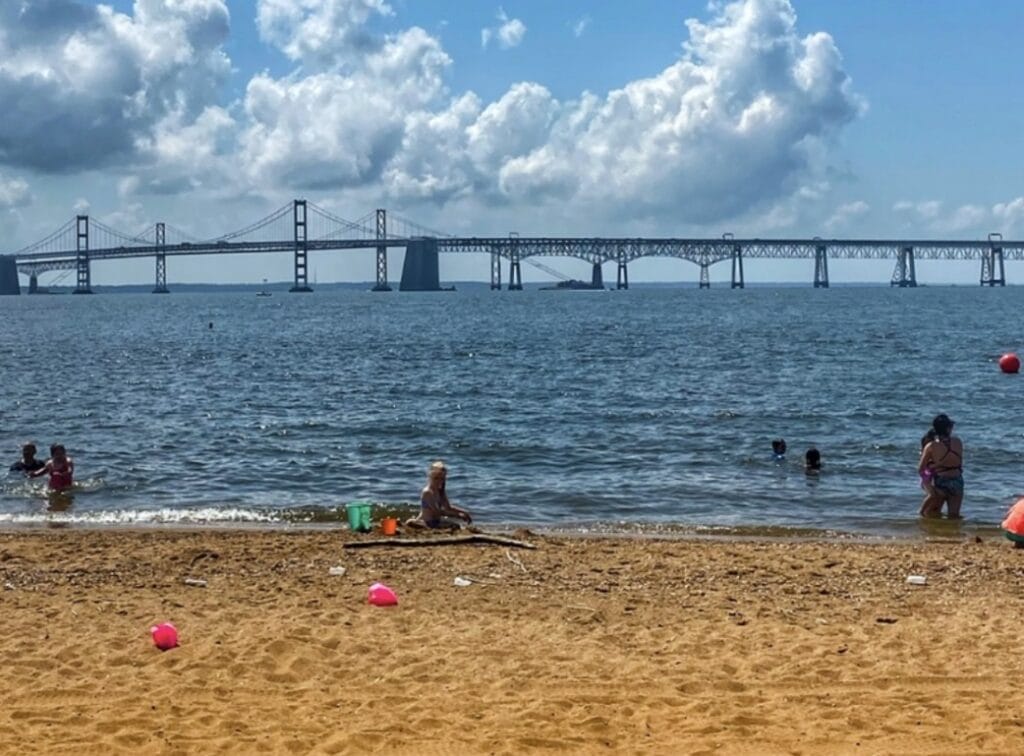
The Chesapeake Bay has earned its highest health score in 40 years of tracking, according to the University of Maryland Center for Environmental Science’s 20th annual Chesapeake Bay and Watershed Report Card.
The Chesapeake Bay received an overall grade of C+, while the broader Chesapeake Bay Watershed, which incorporates ecological, societal and economic indicators, also received a C+.
The report summarizes the latest available data collected across the watershed through December 2025. According to UMCES, long-term trends continue to improve across most regions and indicators, with improving conditions in Bay waters providing better habitat for fish, crabs and other wildlife while also supporting recreation, tourism and local economies.
“Real recovery isn’t measured in single years, it’s built over decades,” said UMCES President Dr. Fernando Miralles-Wilhelm. “The Chesapeake Bay and Watershed’s highest score in 20 years reflects a steady, long-term trajectory, proving what sustained science-guided efforts can achieve.”
Eight of the 15 Bay regions showed improving health trends: Rappahannock, James, Elizabeth, Patapsco & Back Rivers, Upper Western Shore, Lower Eastern Shore, Upper Bay and Lower Bay. The Lower Bay received a B+, the best score on record for any region, while the Lower Western Shore received the lowest grade at D-.
For the first time, the report card also included watershed-wide trends in water quality. Overall water quality is improving over time, according to UMCES. Regional trends were either improving or holding steady in all but two regions, the Lower Eastern Shore and Lower James, where water quality is declining.
The water quality index measures nitrogen, phosphorus, turbidity and conductivity. “The improving water quality over the Chesapeake Bay Watershed is really encouraging,” said Dr. Heath Kelsey, Director of the UMCES Integration and Application Network. “The scores for the tidal portion of the Chesapeake Bay also continue to improve. Taken together, this is strong evidence that restoration efforts are working.”
UMCES said the long-term improvements reflect decades of restoration efforts involving scientists, federal and state governments, nonprofit organizations, local communities and industry.
Despite the record score, researchers emphasized that significant work remains. UMCES will continue monitoring the Bay and watershed as officials work toward revised goals under the Chesapeake Bay Watershed Agreement.
