Montgomery County History: Zadok Magruder

Colonel Zadok Magruder High School sits nestled in Derwood with a student body of just under 1,700 (2019-2020 school year numbers courtesy of MCPS). However, some of you may not know much about the man whom Magruder High is named for: Zadok Magruder, who is one of the founding fathers of Montgomery County.


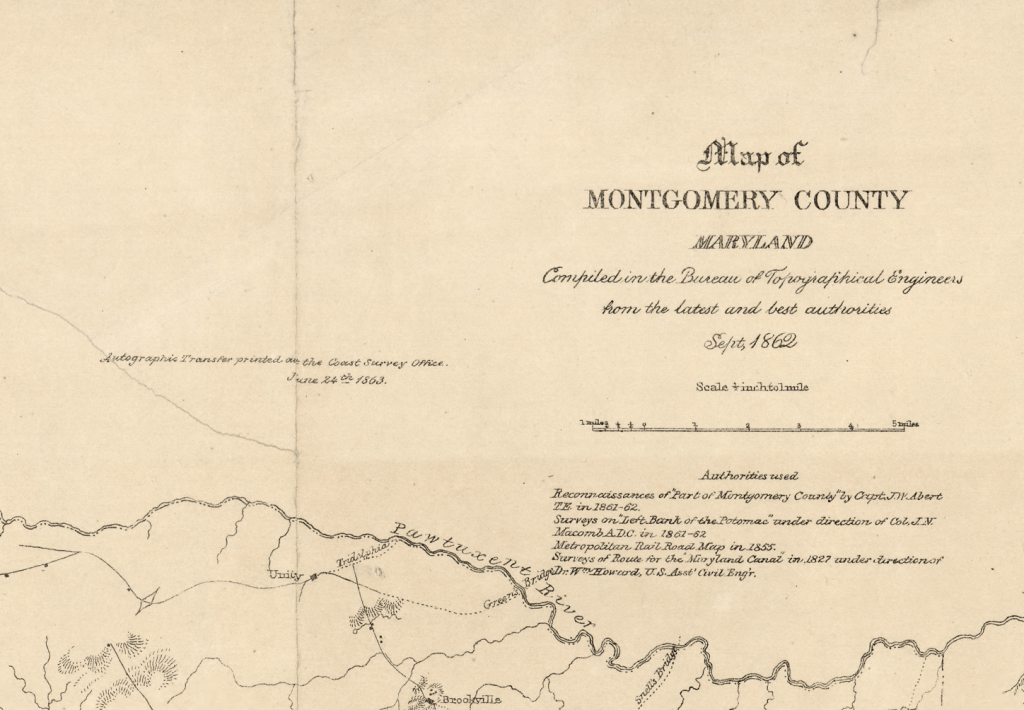
Do you recognize this area? This is a map of Montgomery County in 1863. Created by the Bureau of Topographical Engineers and the United States Coast Survey, this map contains the locations of rural households and natural landmarks, like ravines. This carefully crafted image would’ve been used as a general guide to Montgomery County’s landscape and for military purposes.

If you look closely, you can spot familiar names on the map such as Colesville, Poolsville, Rockville, Gaithersburg, Silver Spring, and even Sligo River.


The Capital of the United States of America was in MoCo on This Day in 1814

Brookeville was settled by Quakers late in the 18th century and was formally incorporated as a town in 1808. Just six years later, it became the “U.S. Capital for a Day.”


5 Historical Locations in MoCo That You Probably Didn’t Know Existed

Montgomery County is full of historical landmarks and buildings, many of which are well known outside of the county. But for every notable landmark, there are many more that are often overlooked by the public.


A Piece of MoCo Housing History #2: Lyttonsville

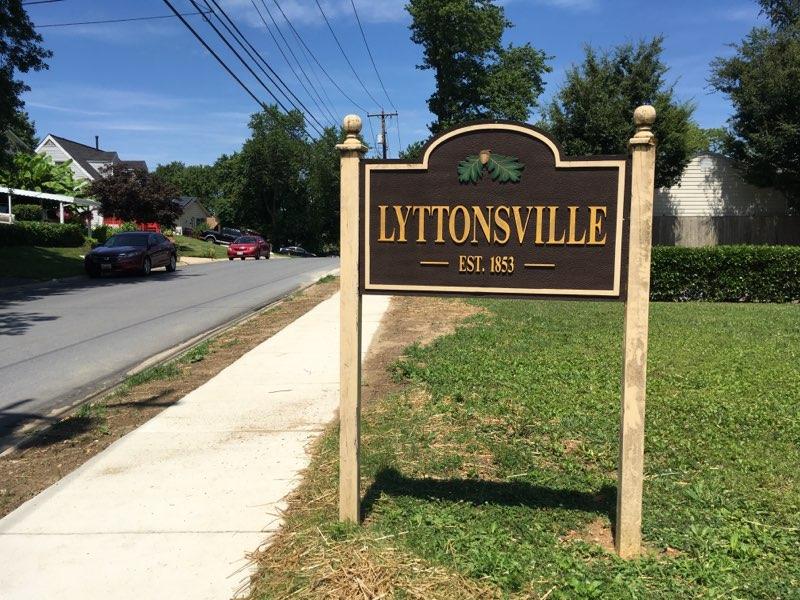
Lyttonsville is a historically Black community that’s situated between current day Bethesda and Silver Spring. It was founded by Samuel Lytton, a free Black laborer working for the Blair family, in 1853. Lyttonsville is one of numerous historically Black communities in Montgomery County. Today, the community has a 17.1 acre park and an elementary school. With the completion of the Purple Line, there will also be two transit stations and a new Ride-On Bus depot.


This map of residential sub-areas in the DC metro region was produced by the Federal Housing Administration in 1937. The map categorizes neighborhoods into grades that represent how worthy they were for investment and insured mortgage lending. The grading system was directly influenced by race and class.

Montgomery County is visible on this map. The higher graded regions (which are shaded darker) include Bethesda, Chevy Chase, and a portion of Silver Spring. Neighborhoods that had higher concentrations of African Americans were assigned the lowest grades (shaded lighter).


The Anchor Inn was one of the most popular restaurants in MoCo for 50 years. Established in 1954 in the heart of Wheaton, The Anchor Inn was one of the first places in Montgomery County to apply for and receive their liquor license in 1964.

“Anchor Inn was part of traditions for many others in the community, said Scaggs, such as the Colesville Lions Club, Wheaton-Kensington Chamber of Commerce, Good Counsel High School and the Wheaton Volunteer Rescue Squad. The fund-raisers, high school events and community fellowship were a part of the family’s service to the area apart from serving quality food.”


If you’re from MoCo, you’re likely familiar with East and West Gude Drive (pronounced Goo-Dee), but you may not be as familiar with the family the road is named for.

The Gude family business was A. Gude Sons Co. Nursery. It was located where Gude Drive and Crabbs Branch Way are today. Gude Drive cuts through where the family farm was located.


Sidney Hechinger opened his first hardware store in Washington D.C. in 1919. In 1953, the company had grown to five stores. Sidney brought in his son, John Hechinger, and his son-in-law, Richard England, as partners. By the early 70s, the company had doubled in size to ten stores. Hechinger and England took the company public in 1972.

John Hechinger Jr. became was named president of the company in 1986. He was the third generation of Hechingers to run the show and reincorporated the company in Delaware the next year. At the time, the company was up to just over 50 stores. By 1995, there were 131 stores in the mid-Atlantic region of the United States. That’s when the competition from Home Depot and Lowe’s forced Hechinger to close almost twenty stores, while reformatting a few others. It was the first major decrease in stores the company had ever seen.


View More Stories