

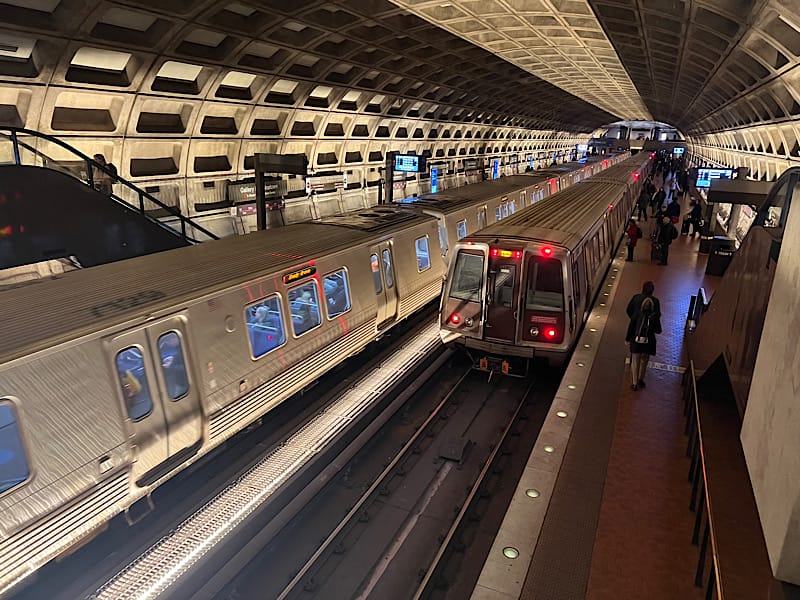
Metro’s General Manager and Chief Executive Officer Randy Clarke presented a proposed budget for the July 2026 through June 2027 fiscal year to the WMATA Board of Directors on Thursday, outlining a plan centered on improving bus and rail service, increasing ridership, and boosting revenue without raising fares.
The proposal emphasizes shorter wait times on several rail lines and expanded bus service across the region, while continuing to identify cost-saving opportunities. Metro officials say the plan is designed to meet growing ridership demand while improving reliability and operational efficiency.
“Metro ridership has grown in recent years, and we want to continue to meet that demand for the region,” said Clarke. “This proposal reflects our commitment to delivering safe, frequent, and reliable service, while preparing Metro for the potential long-term capital challenges ahead.”
Under the service plan, weekday wait times would be reduced on the Orange, Silver, and Blue lines, with improved late-night service on the Red Line. Bus service would increase on approximately 15 percent of routes systemwide. Overall, the proposal calls for more efficient bus and rail operations through schedule optimization and by adding capacity in areas where crowding has begun to emerge.
For the first time, Metro’s budget proposal includes a multi-year budget and service plan forecast, a move officials say will improve long-term planning and predictability for both Metro and its regional funding partners.
Bus improvements would include shorter wait times on nine high-ridership routes, route enhancements on five routes, extended service hours on four routes, and the potential introduction of two new limited-stop routes in Northern Virginia.
On the rail side, the proposal calls for improved all-day and late-night service. Trains would run every three to six minutes in the system’s core and every six to 10 minutes in outer areas on weekdays. After 9:30pm, trains in the core would operate every four to eight minutes. Overall, the plan includes a six percent increase in daily weekday train trips.
Specific rail service increases include Orange, Silver, and Blue line trains operating every 10 minutes on weekdays, an improvement from the current 12-minute service. Red Line trains would run every seven to eight minutes after 9:30pm, improving upon the current 10-minute intervals.
The budget also outlines two possible scenarios for Metro’s six-year Capital Improvement Program. One scenario assumes no new regional investment through the DMVMoves initiative and would require reduced capital spending and deferred projects, a path Metro warns could lead to declining reliability, a worse customer experience, and increased safety risks over time.
The second scenario includes an additional $460 million in regional investment as outlined in the DMVMoves endorsement. That funding would support modernization of the bus and rail system, including updates to rail signaling, improvements to bus reliability, and initiatives aimed at making Metro safer and more cost efficient.
Metro will host public hearings on the proposed budget in February. An in-person hearing is scheduled for Tuesday, Feb. 3, 2026, at 6pm at the Arlington County Board Room, with an informational open house beginning at 5:30pm Two virtual hearings will follow on Wednesday, Feb. 4, at 12pm, and Thursday, Feb. 5, at 6pm.
Additional information, including FAQs and details on the public comment period, will be posted at wmata.com/budget in the coming weeks. The WMATA Board of Directors is expected to approve a final budget in April 2026. The new fiscal year begins July 1, 2026, and runs through June 30, 2027.
