

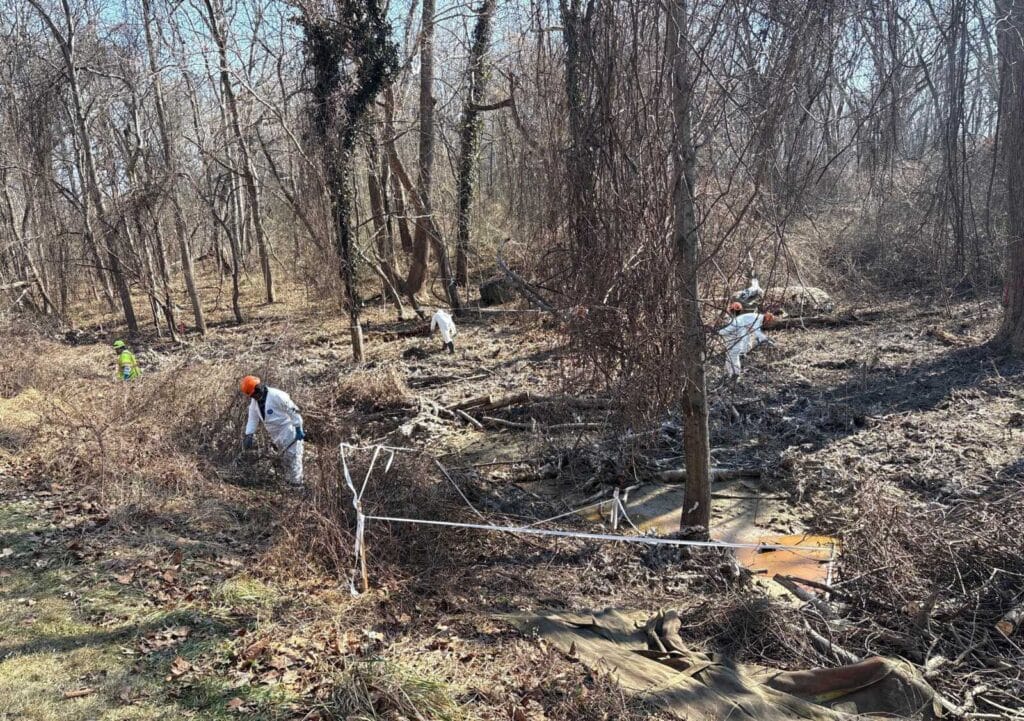
DC Water has begun rehabilitation and environmental restoration efforts following the January 19 collapse of a section of the Potomac Interceptor that caused a sewer overflow. The collapse released an estimated 243.5 million gallons of wastewater and was described by the University of Maryland as one of the largest sewage spills in U.S. history.
Contaminated soil and debris are being removed, and clearing work is underway in and around the collapse site under an Environmental Restoration Plan approved by the National Park Service, which issued a Special Use Permit on February 28 for repairs within the C&O Canal National Historical Park between Locks 10 and 14. The restoration will take place in two phases, starting with immediate stabilization and removal of contaminated materials, followed by broader environmental restoration after emergency repairs are completed and the temporary bypass system is deactivated.
The plan addresses three main areas: the collapse site, nearby wetlands and stream corridors, and the impacted section of the C&O Canal, with work coordinated among federal, state, and local agencies. DC Water has expanded water quality monitoring, adding a new sampling site at Sycamore Island and increasing total testing locations from six to nine. Officials say water quality levels can fluctuate due to a variety of environmental factors and cannot be attributed solely to this incident. DC Water will continue monitoring, provide public updates, and conduct post-restoration assessments as cleanup efforts progress.
