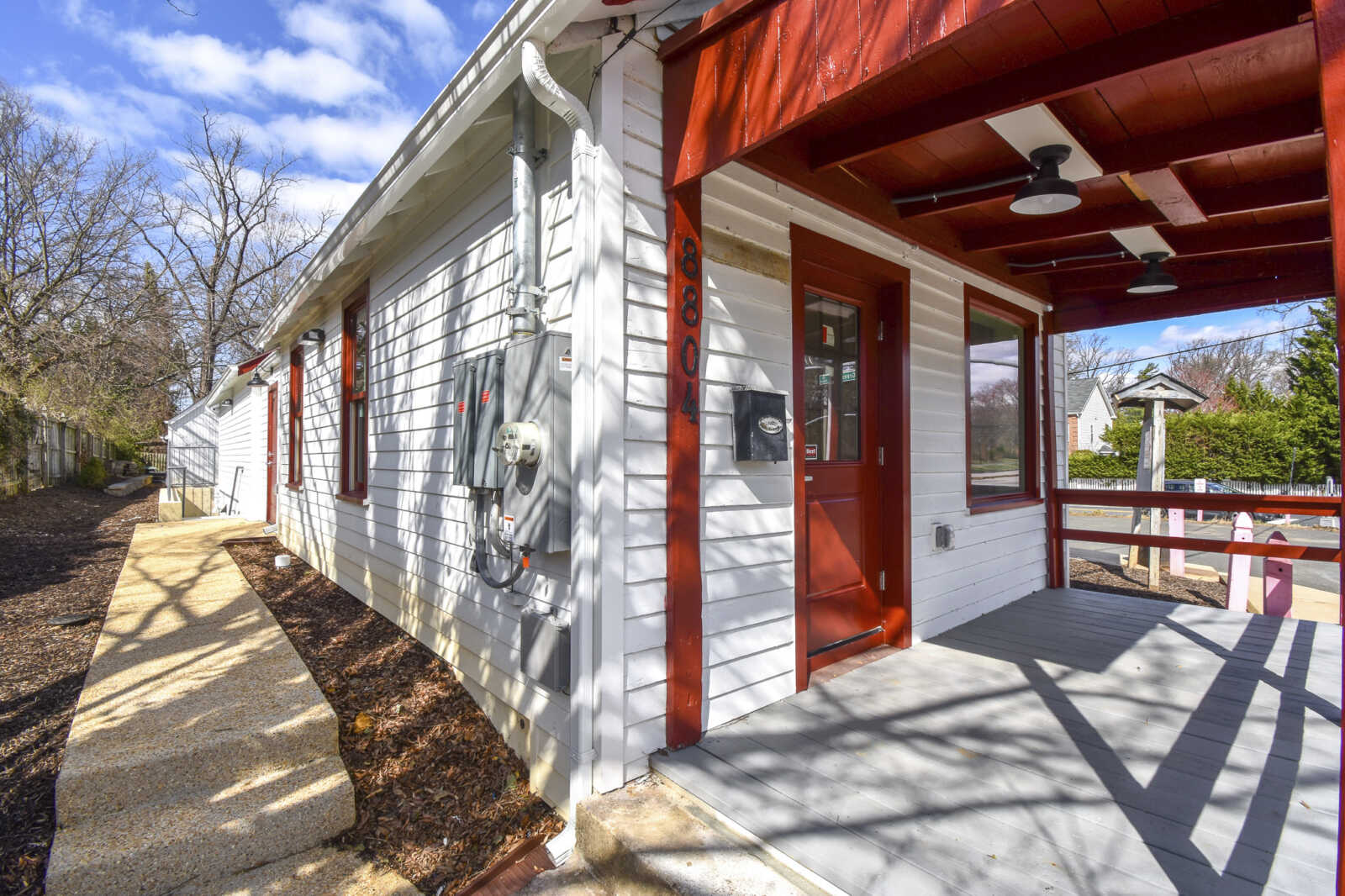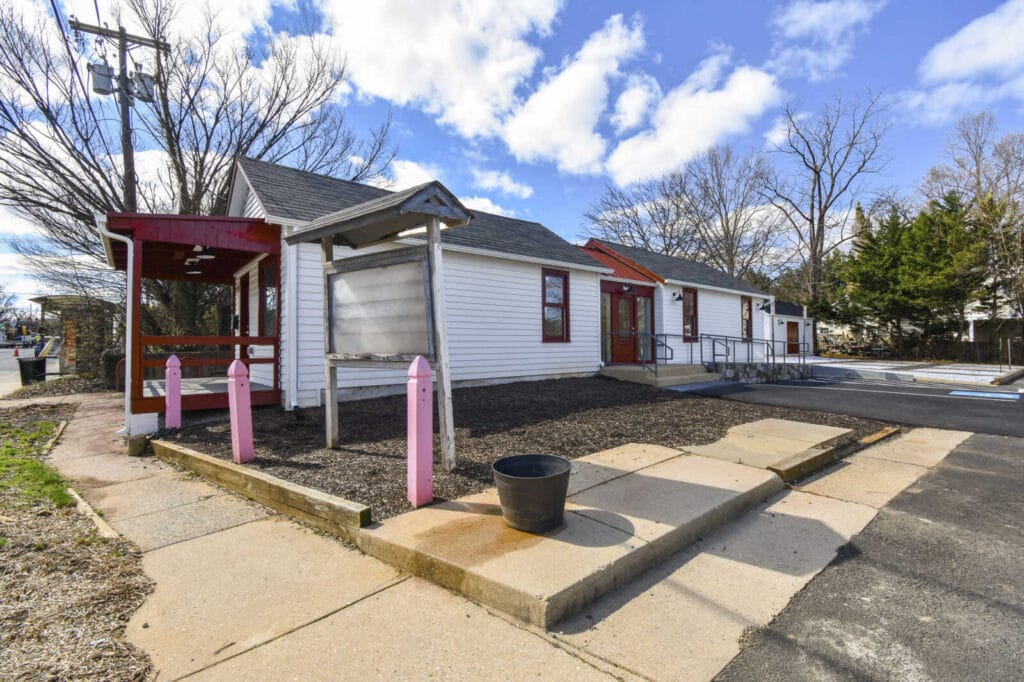
The historic Bethesda Community Store property, long a recognizable landmark along Old Georgetown Road, is now officially on the market, offering a rare opportunity to own a piece of the area’s commercial history.
The property, located at 8804 Old Georgetown Road, has been listed for $2.1 million by Feldman Ruel. Sitting on a 12,363-square-foot lot at the signalized intersection with Greentree Road, directly across from the National Institutes of Health campus, the site has operated continuously as a commercial location for more than 130 years.
The 1,901-square-foot building is being delivered vacant in what is described as a “warm lit shell,” allowing a future owner to customize the space. The structure itself has been fully renovated and preserved, with a newer building extension that includes updated HVAC, plumbing, and electrical systems.
Despite its underlying R-60 zoning, the property carries rare commercial entitlements that allow for a wide range of uses, including food and beverage, retail, office, and clinic space. These entitlements were established through a zoning text amendment and reinforced by a circuit court order, making them effectively irreplaceable in the Bethesda market. Food truck operations are also permitted on-site, and a drive-thru can be added as an accessory use with site plan approval.
The site most recently gained widespread attention during its five-year run as a trolley outpost for Call Your Mother, which ended operations at the location last year. Since then, Silver and Sons has taken over the space as a permanent food truck presence.
An accessory shed and the approved food truck use add another layer of flexibility for future owners, whether as supplemental income streams or as part of a broader redevelopment vision.
With its prominent visibility, proximity to a major employment hub, and a history that dates back more than a century, the former Bethesda Community Store stands out as one of the few surviving early 20th-century retail structures in the area.