

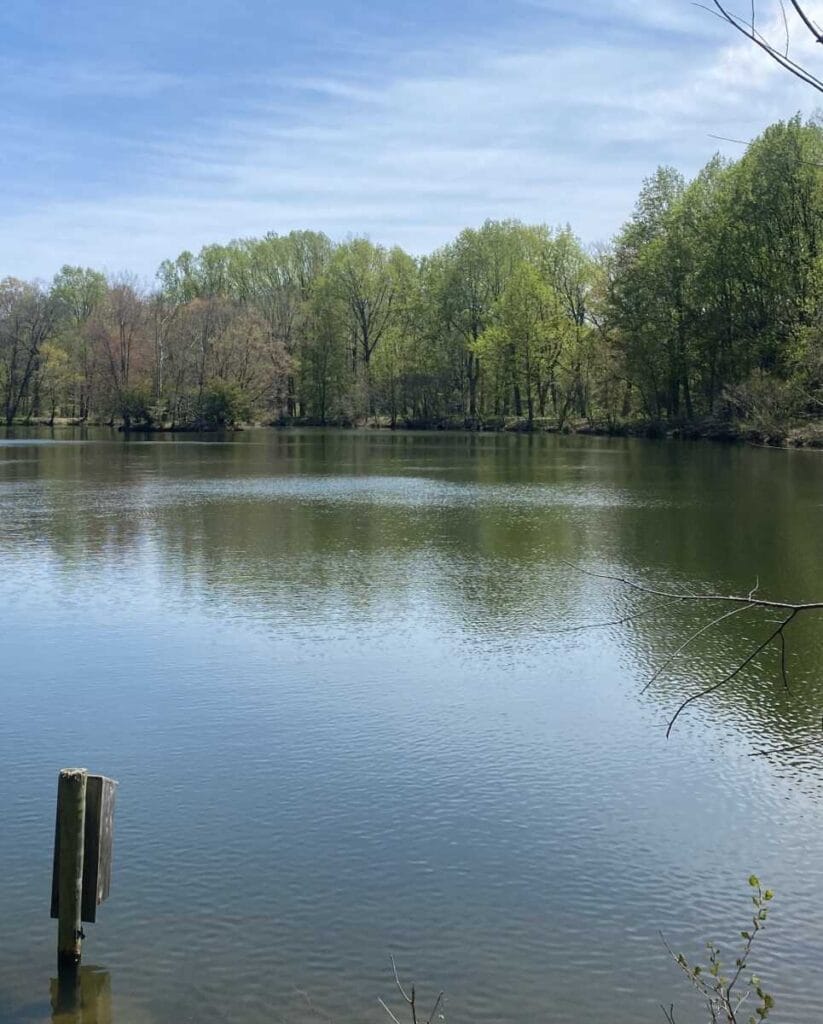
Maryland holds the unique distinction of being the only U.S. state without any natural lakes. While the state boasts an abundance of rivers, streams, and the extensive Chesapeake Bay, you won’t find a single body of water formed by natural geological processes that is classified as a natural lake within its borders. This characteristic sets Maryland apart from every other state, most of which have numerous glacial, tectonic, or volcanic lakes.
Despite this geological particularity, Marylanders and visitors still have access to plenty of water-based recreation thanks to numerous man-made reservoirs and impoundments. Today we will look at the five largest lakes and reservoirs (all man-made) in the state of Maryland.
Before getting into the statewide rankings, it’s worth taking a look at Montgomery County. While none of the county’s lakes or reservoirs rank among Maryland’s five largest, the county is home to several well-known bodies of water. Little Seneca Lake, located within Black Hill Regional Park in Boyds, is Montgomery County’s largest lake entirely within its borders. Created in 1984 by damming Little Seneca Creek, the 505-acre lake reaches depths of up to 68 feet and has become a popular destination for boating, fishing, kayaking, hiking, and wildlife viewing.
If you include reservoirs that form the county line with Howard County, two larger WSSC-managed reservoirs come into play. Triadelphia Reservoir spans roughly 800 acres and was created by the Brighton Dam, while Rocky Gorge Reservoir covers approximately 773 acres behind the T. Howard Duckett Dam. Both are part of the Patuxent River system and help supply drinking water to the Washington metropolitan region. Even so, because those reservoirs are shared with Howard County, Little Seneca Lake is generally considered Montgomery County’s largest “homegrown” lake. Lake Needwood in Rockville is the county’s second-largest lake at approximately 75 acres.
The Conowingo Reservoir stands as Maryland’s largest lake/reservoir, covering an expansive 8,563 acres where the Susquehanna River meets Harford and Cecil Counties, near the Pennsylvania border. Created by the Conowingo Dam in 1928, its primary purpose is the generation of hydroelectric power, making it a critical source of renewable energy for the state. Beyond electricity, it also contributes to the public water supply for Baltimore City and serves as a cooling source for a nuclear power plant.
While vital for power and water, the reservoir faces significant environmental challenges due to its role in trapping sediment and nutrients flowing toward the Chesapeake Bay, a capacity it is rapidly approaching. Despite these concerns, it remains a popular destination for fishing, particularly for various sportfish, and is renowned as a prime location for observing bald eagles, especially during the colder months.
Located in the picturesque Appalachian Mountains of Garrett County, Deep Creek Lake is Maryland’s largest inland lake and second overall, spanning approximately 3,900 acres with 69 miles of shoreline. Originally constructed in the 1920s for hydroelectric power, its management has evolved to balance energy production with its role as the state’s premier recreational lake. This balance has cemented its status as a year-round tourist destination, offering a wide array of summer activities such as boating, fishing, swimming, and watersports.
In the winter, its proximity to Wisp Resort transforms the area into a hub for skiing and snowboarding. Public access is readily available through Deep Creek Lake State Park, which provides amenities like a beach, boat ramp, and camping facilities, cementing its reputation as a cornerstone of Maryland’s outdoor leisure.
The Liberty Reservoir, covering about 3,106 acres across Baltimore and Carroll Counties, is third and serves as a crucial component of Baltimore City’s drinking water system. This reservoir, with its 82 miles of shoreline and impressive maximum depth of 144 feet, is meticulously managed to ensure the purity of the water it supplies. While swimming is prohibited to protect water quality, the reservoir is a favored spot for fishing, attracting anglers seeking species like largemouth bass, smallmouth bass, crappie, and white perch. Boating is permitted, though restricted to non-motorized vessels or those with electric motors, and requires a permit from the City of Baltimore.
The surrounding lands are part of a Cooperative Wildlife Management Area, offering peaceful opportunities for hiking, birdwatching, and regulated hunting, providing a tranquil natural escape relatively close to urban centers.
Coming in fourth is Loch Raven Reservoir, the second-largest body of water in Maryland, covering approximately 2,400 acres across Baltimore County. Together with Liberty and Prettyboy reservoirs, it forms the backbone of Baltimore City’s public water supply, providing drinking water to hundreds of thousands of residents throughout the region.
Originally created by a small dam in 1881 and significantly expanded in the 1920s, Loch Raven Reservoir is perhaps best known for the history hidden beneath its waters. The expansion submerged the historic mill town of Warren, Maryland, leaving behind the remains of homes, businesses, churches, and roads beneath the reservoir. Today, Loch Raven is a favorite destination for anglers, kayakers, hikers, birdwatchers, and cyclists, with miles of scenic trails surrounding its shoreline.
Rounding out the top five is Prettyboy Reservoir, which spans approximately 1,500 acres in northern Baltimore County, with a small portion extending into Carroll County. Completed in 1933, Prettyboy serves as the uppermost reservoir in Baltimore’s three-reservoir water system and can hold roughly 19 billion gallons of water at full capacity.
Unlike Liberty and Loch Raven, Prettyboy functions primarily as a source-water reservoir. Rather than sending water directly into Baltimore’s distribution system, it stores water and gradually releases it into the Big Gunpowder Falls, helping replenish Loch Raven Reservoir farther downstream before the water undergoes treatment. Its forested shoreline and relatively undeveloped surroundings also make it one of Maryland’s most scenic reservoirs, attracting visitors for fishing, hiking, wildlife viewing, and peaceful paddling.
