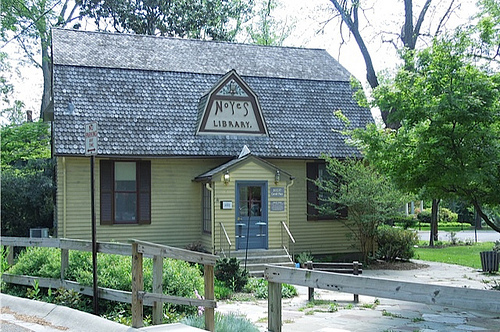
Garrett Park is a small, incorporated town in Montgomery County located in a sylvan setting next to Rock Creek Park. Garrett Park was incorporated in 1898 and has an active town government and resident-directed  organizations. The town is laid out as an English village with winding, tree-lined streets and a variety of housing types. It’s on the National Register of Historic Places and as an Arboretum (established in 1977), has a  Arboretum Committee to manage the health and variety of trees. In 1962, by referendum Garrett Park became the first Nuclear Free Zone in the United States.  Below you’ll see a brief history of the town leading up to 1898 By Paul Edlund, former mayor of Garrett Park (1990-1996), via the official website of the Town of Garrett Park

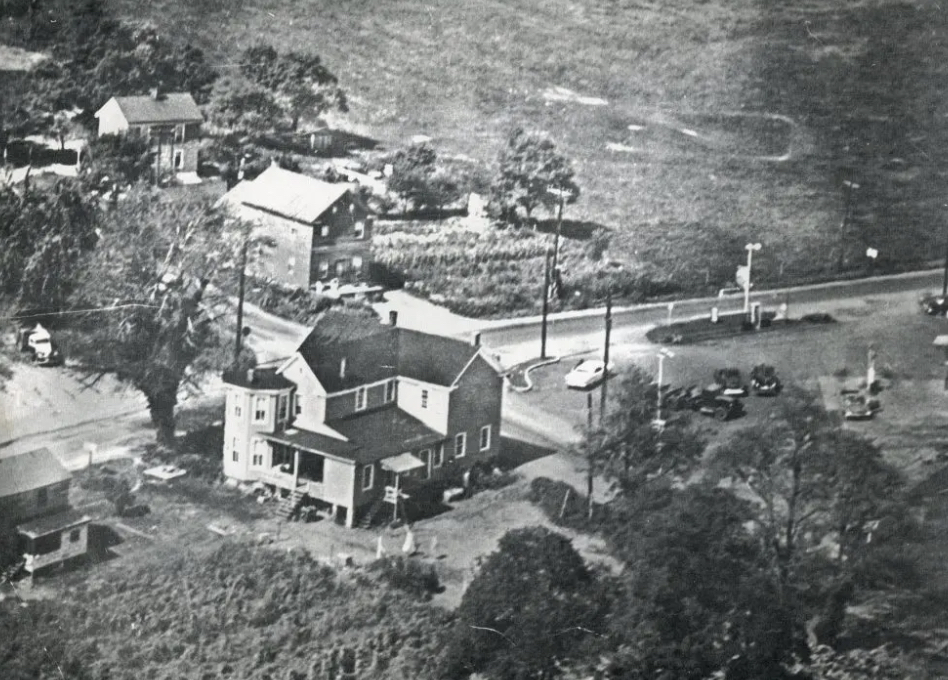
By the time of its incorporation as a Town in 1898, Garrett Park was a busy small town with a population of over a hundred and containing more than 30 buildings. Much of life centered around the trains and the station, the railroad being the only public transportation in the early years. The trains to and from Washington were numerous, as many as nine a day into the city, with train service on Saturdays and Sundays.


Uptons, a discount department store that started in Georgia in 1985 and grew to 75 stores across the east coast by the mid 90s, opened a Montgomery County location in the Kentlands where The Colonnade development currently stands.

(more…)


In addition to riding the carousel, families are welcome to enjoy many other FREE activities throughout the Park, including live music & performances, kids’ arts & crafts, open artist studios & galleries, and lots more (see below)!  Plus, the star of the show: carousel rides!

View the Full Schedule


With the 130th annual Laytonsville Community Parade returning to Laytonsville on Saturday, May 14 “Better Together for 130 Years” after a couple years off due to Covid-related concerns, we wanted to share some history on the town. Information and Pictures courtesy of the Laytonsville Historical Center:

Laytonsville has stood as a crossroad to the history of Maryland for over two centuries.  The intersection of the northern district of the town provides a route to the major metropolitan areas of the state– Damascus and Frederick County, to the east to Baltimore, to the south toward Washington, D.C., and to the west the Potomac River.  Although in January 1998 Laytonsville is still a cozy town, its small size, 614 acres and a population of 295, belies its long and interesting history. 


Information and photos from: PLACES from the PAST: The Tradition of Gardez Bien in Montgomery County, Maryland by Clare Lise Kelly M-NCPPC , courtesy of Montgomery Planning

Maryland was one of the last states in the Union to establish a public school system. Through the mid-1800s only private academies and church schools were available for privileged children. A surviving example of a church school stands in the Forest Glen Historic District. In 1874, members of St. John’s Catholic Church in Forest Glen built St. John’s Academy in a modest one-room structure.


“In diverse and remarkable ways, women have made major contributions in the history of Montgomery County. The lives and achievements of some Montgomery County women are legendary, while the significance of others is often overlooked.”

PLACES from the PAST: The Tradition of Gardez Bien in Montgomery County, Maryland by Clare Lise Kelly M-NCPPC highlights just some of these legendary women below, courtesy of Montgomery Planning:


Some grew up with the Maryland Soccerplex being there as far back as they can remember, but for those of us who were around and remember the times before 1999, we know that something else was there before. The following history (and featured photo), dating back to 1913, comes from the King Barn Dairy MOOseum in Boyds:

In 1913 James King purchased a 350 acre farm in between Germantown and Boyds, Maryland from the Lyddane family, and moved in with his new bride, Macie.  Over time, as their family grew, the farm flourished as part of the dairy boom that brought wealth to Montgomery County in the Twentieth Century.


The Lincoln Assassination Connection, by Susan Soderberg

Many of you who have seen the recent movie The Conspirator will know that George Andrew Atzerodt (alias Andrew Atwood), was one of the Lincoln assassination conspirators executed on July 7, 1865. Atzerodt was arrested in Germantown, the town where he had spent many years as a boy. How he got involved with the Booth gang and why he ended up back in Germantown is a compelling story.


Per Montgomery County:

A collective of Maryland organizations and agencies have completed a groundbreaking research document, the “Maryland LGBTQ Historic Context,” making Maryland the second state in the nation to do so. The report, released in September 2020, illuminates Maryland LGBTQ history in rural, suburban and urban locations. The report will be the focus of a Montgomery History presentation available online starting Monday, April 11.


View More Stories