Uptons, a discount department store that started in Georgia in 1985 and grew to 75 stores across the east coast by the mid 90s, opened a Montgomery County location in the Kentlands where The Colonnade development currently stands.
|


Uptons, a discount department store that started in Georgia in 1985 and grew to 75 stores across the east coast by the mid 90s, opened a Montgomery County location in the Kentlands where The Colonnade development currently stands.

The Detroit Lions surprised many by going defensive line with their first two picks in the draft after selecting Josh Paschal with their second-round pick in the 2022 NFL draft, the 46th overall pick. Paschal is a Prince George’s County native who attended school and played football at Good Counsel in Olney, where he was ranked among the top defensive ends in the country.
Paschal has overcome plenty in his NCAA football career. After a strong freshman season in 2017, he was diagnosed with a malignant melanoma lesion that was discovered on his foot, in August of 2018. It was a rare, aggressive form of skin cancer called acral lentiginous melanoma, or ALM. And it needed to be treated immediately. Josh had multiple surgeries on his foot to remove the cancerous growth and replace the damaged tissue.
Last night the Atlanta Falcons quickly made a trade to get into position to draft Penn State’e Arnold Ebiketie with the 38th pick in the draft. The 6-2, 250-pound linebacker transferred to Penn State from Temple and was named first-team All-Big Ten in 2021. He had18 tackles for loss, 9.5 sacks, and seven quarterback hits for the Nittany Lions last season.
Ebiketie originally attended Richard Montgomery High School in Rockville before transferring to Albert Einstein High School in Kensington where he had 21.5 sacks as a senior in 2017. While at Einstein, he also played basketball and was a sprinter and high jumper for the track & field team.

In addition to riding the carousel, families are welcome to enjoy many other FREE activities throughout the Park, including live music & performances, kids’ arts & crafts, open artist studios & galleries, and lots more (see below)! Plus, the star of the show: carousel rides!

Update: Thursday, April 28, 2022:
Gaithersburg, MD – Detectives from the Montgomery County Department of Police – Collision Reconstruction Unit (CRU) are investigating a pedestrian collision that occurred today, April 28, 2022, at the intersection of Tuckerman Lane and Kings Riding Way in North Bethesda. At approximately 9:57 a.m., 2nd District Officers and Montgomery County Fire Rescue personnel responded to the location for the report of a pedestrian struck.

The TLC program is a long-running annual grant program that funds small projects that coordinate transportation and land use. The awards fund planning and engineering of small projects that would not otherwise be able to move forward and help advance the region’s goals of being multimodal and more walkable.
The five Montgomery projects that received grants were the Olde Towne to Washington Grove Bicycle Connection (City of Gaithersburg); the Montgomery County Streetlight Standards program; the Fleet and Monroe Streets Complete Streets Feasibility Study (City of Rockville); the Takoma Park Metropolitan Branch Trail Upgrade (City of Takoma Park) and the City of Takoma Park New Avenue Bikeway.

The Montgomery County Department of Health and Human Services has released an updated population health report, “Health in Montgomery County 2010-2019”, which includes “data and statistics on major health topics such as demographics and social determinants of health; vital statistics; maternal and infant health; chronic diseases; infectious diseases; behavioral health; injuries; and environmental health” in Montgomery County and how it compares to State and national health outcomes. According to the report, health outcomes in Montgomery County have performed better than state and national averages, but there are “several health conditions with increasing trends and disparities by race/ethnicity, age, sex, and geographic areas that warrant special attention.”
Findings of the report, per Montgomery County:

With the 130th annual Laytonsville Community Parade returning to Laytonsville on Saturday, May 14 “Better Together for 130 Years” after a couple years off due to Covid-related concerns, we wanted to share some history on the town. Information and Pictures courtesy of the Laytonsville Historical Center:
Laytonsville has stood as a crossroad to the history of Maryland for over two centuries. The intersection of the northern district of the town provides a route to the major metropolitan areas of the state– Damascus and Frederick County, to the east to Baltimore, to the south toward Washington, D.C., and to the west the Potomac River. Although in January 1998 Laytonsville is still a cozy town, its small size, 614 acres and a population of 295, belies its long and interesting history.

“These local maps will help us identify where we can take action to protect vulnerable neighborhoods now and in the future from extreme heat risk,” said Montgomery County Executive Marc Elrich. “We are pleased to be participating in this nationally competitive program and continuing our work in Montgomery County toward equitable climate resilience.”
This campaign is part of a national effort to track “Urban Heat Islands.” Heat inequities will be tracked in 14 states and two international cities. Urban Heat Islands are areas that can be up to 20 degrees hotter than nearby neighborhoods due to buildings, pavement, and other parts of urban environments amplifying high temperatures compared to nearby vegetated areas. They can put people at heightened risk of illness and death during extreme heat events. Through this effort local climate scientists and residents will work together to identify the hottest areas in the County. Heat equity refers to the development of policies and practices that mitigate heat islands and help people adapt to the impacts of extreme heat in a way that reduces the inequitable distribution of risks across different populations within the same urban area.
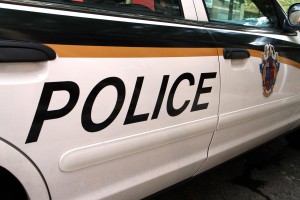
A Lyft driver was carjacked at gunpoint Wednesday night in the 8000 block of 13th St in downtown Silver Spring. According to Montgomery County Police, officers were called to the scene at approximately 10:11pm. The driver reportedly picked up three passengers, one of which pulled out a handgun and demanded the driver leave the vehicle. The three individuals then took off with the vehicle.
The incident is under investigation and Montgomery County Police are expected to release addition details soon. There are no suspects in custody at this time.

To serve in this paid volunteer position, all election poll workers must be registered to vote in the State of Maryland; able to speak, read and write the English language; and cannot hold, or be a candidate for, public or party office. In addition, election workers may not serve as a campaign manager for a candidate or as treasurer for any campaign finance entity.
Training is required and will be provided to all election workers. This includes an online quiz, virtual training and classroom in-person training. Volunteers will be paid for completing training and working the election. Several positions are offered, including all-day and part-day. More information is available at www.777vote.org.