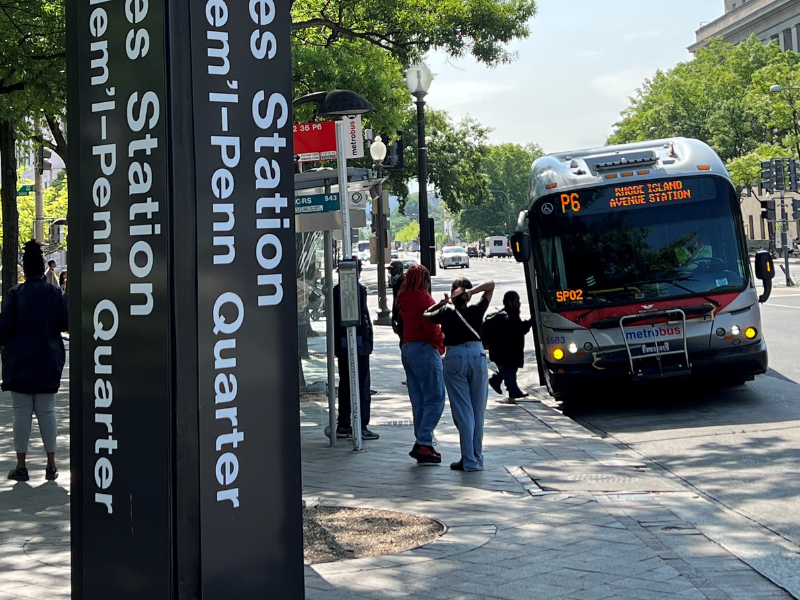
Metro will add automated cameras to buses to keep unauthorized vehicles out of bus-only lanes and bus stop zones under an agreement with the District of Columbia and recommended for approval by the Metro Board of Directors Finance Committee today. The new initiative, called Clear Lanes, is modeled after similar programs, including San Francisco and New York City, and will be the first to use automated camera technology to enforce bus stop zones in addition to bus-only lanes.


Per WMATA: Metro today announced travel alternatives to help customers prepare for the 2023 Major Construction scheduled for this summer. Starting Friday, May 12, Metro will begin a four-part construction effort focusing on system maintenance and modernization- including rail replacement, fiber optic cable installation, and improved station facilities.

This major construction will result in rolling service impacts on the Orange, Silver, and Green lines over the summer months. Free shuttle bus service will be available for customers during all station closures. Customers are advised to plan extra time for their travel.


Per WMATA: Metro’s Board of Directors approved the $4.8 billion capital and operating budget for fiscal year (FY) 2024 which supports increased bus and rail services, simplifies fares for customers, creates a new low-income fare program, caps MetroAccess fares at $4, furthers the Better Bus Initiative and enhances safety measures.   

Additionally, the $2.4 billion capital budget allocates funds to invest in infrastructure projects and sustainability efforts to ensure #YourMetro is safe, reliable and efficient. This includes building new bus garages to support a zero-emission bus fleet, new Metrobuses and MetroAccess vehicles, advancing Metro’s new 8000-series railcars, technology upgrades to support next generation train systems and development of Blue, Orange and Silver rail line corridor improvements.


Per WMATA: Metro announced 50 events in 50 days kicking off the next phase of its Better Bus Network Redesign. During this phase, Metro will also provide a first look at the draft Visionary Network of the future that provides frequent, fast, and reliable service, matches the region’s changing travel needs, advances equity and sustainability, and increases access to opportunities.

Starting Monday, April 17 through Monday, June 5, Metro will host community-focused events across the region and launch an interactive website where customers can explore the reimagined bus network and provide input. The Better Bus “Experience LIVE!” will include in-person workshops, community pop-up events, and virtual “lunch and learns.” The virtual “Experience LAB” will also offer people an interactive tool that enables customers to compare their trip today to their routes in the draft Visionary Network, as well as a map library to explore route profiles and the network as a whole.


Per WMATA: Metro announced concurrence from the Washington Metrorail Safety Commission (WSMC) that allows Metro to move to the final phase of its 7000-series Return-to-Service Plan. Under the new plan details, the operations team will implement a 15-day manual measurement interval with a path to progress to a longer measurement period in the future. 

The new 15-day process comes as a result of data analysis combined with operational considerations that will make more trains available to meet the May 7 service schedule, which coincides with the return of the Yellow Line and allows for the training of additional rail operators.


Per WMATA: After working together with law enforcement leaders from across the world over the last three months, Captain Aaron Donald and Lieutenant Michael Bradshaw of the Metro Transit Police Department graduated from the inaugural class of the DC Police Leadership Academy (DCPLA) hosted by the Metropolitan Police Department (MPD).

The class of approximately 70 rising law enforcement leaders included participants from across the US and representatives from Germany, Canada, Netherlands, and England. The three-week program was broken into two sessions. Participants engaged in shaping the future of policing by developing their personal leadership abilities through discourse and interactive activities.


Per WMATA: Metro is welcoming customers back to the Yellow Line on Sunday, May 7, 2023, beginning with the start of rail service at 7 a.m. The reopening will mark the completion of extensive rehabilitation work on the Yellow Line tunnel and bridge between Pentagon and L’Enfant Plaza stations.

Following eight months of construction for safety critical repairs, customers will once again have a reliable and convenient connection across the Potomac River between Virginia and DC, instead of only using the Blue Line. This will reduce travel times by as much as 15 minutes and give customers back valuable time. Initially, trains will run every 8 minutes weekdays and every 12 minutes after 9:30 p.m. and on weekends between Huntington and Mt Vernon Square. Blue+ service that has been operating between Huntington and New Carrollton will be discontinued once the Yellow Line reopens.


Per WMATA: Many young people with autism have a unique connection with transit. In recognition of that special bond, Metro invited 26 budding train announcers with autism to record boarding and safety announcements that will be heard throughout the transit system in the month of April to raise awareness about autism during Autism Acceptance Month and the Autism Transit Project. 


Per WMATA: Metro today released its Zero-Emission Bus Transition Plan to provide cleaner, Better Bus service for the region with a proposal to transition to a 100 percent zero-emission bus fleet by 2042, accelerating the timeline by three years. The move to zero-emission buses will require significant investments to work with local utilities to upgrade power supplies, install charging equipment and supporting infrastructure, and provide training and maintenance, in addition to the replacement cost of the nearly 1600 bus fleet.

“We will continue to look for ways to further accelerate the transition to zero-emission buses, which provide customers with the same safe, reliable service at a much smaller carbon footprint,” said Metro General Manager and Chief Executive Officer Randy Clarke. “Every trip taken with Metro instead of a car reduces greenhouse gas emissions and transitioning to zero-emission buses will deliver additional environmental and health benefits while improving the quality of life for people across the region.” Under the new timeline, half of Metro’s fleet will be zero-emission buses in 10 years. To accommodate the new buses, Metro will open its first all zero-emission bus garage at Northern in 2027, with five of Metro’s nine garages ready for zero-emission buses by 2031 and the remaining by 2041.


Per WMATA: A new three-digit lifeline number is now available to help individuals experiencing a life-threatening crisis. In Metro station entrances, platforms and top garage levels, customers will see enhanced signs with the new Suicide and Crisis Lifeline number, 988.

The three-digit nationwide phone number is available for anyone having a suicidal crisis or mental health related distress. Individuals can speak directly with trained crisis counselors 24 hours a day, 7 days a week. All calls and texts are free and confidential. The 988 number does not replace calling 9-1-1 or MYMTPD for immediate medical and emergency situations.


The Metro Transit Police Department (MTPD) announced the launch of its Body-Worn Camera Program, which will train and equip all MTPD officers, sergeants and lieutenants to begin carrying body-worn cameras in the coming months. The body-worn cameras will supplement the more than 20,000 cameras Metro has throughout the rail, bus, and paratransit system to further strengthen public safety and security efforts.

The department will take a staged approach in its rollout of body-worn cameras, beginning with a group of approximately two dozen highly trained officers in the MTPD’s Special Response Team (SRT) and Tactical Operations Unit (TOU). These officers will be the first to begin carrying body-worn cameras later this month. Following the initial deployment, body-worn cameras will be put into use at each of the three MTPD districts, with an estimated 315 officers trained and equipped by the end of the summer.


View More Stories