

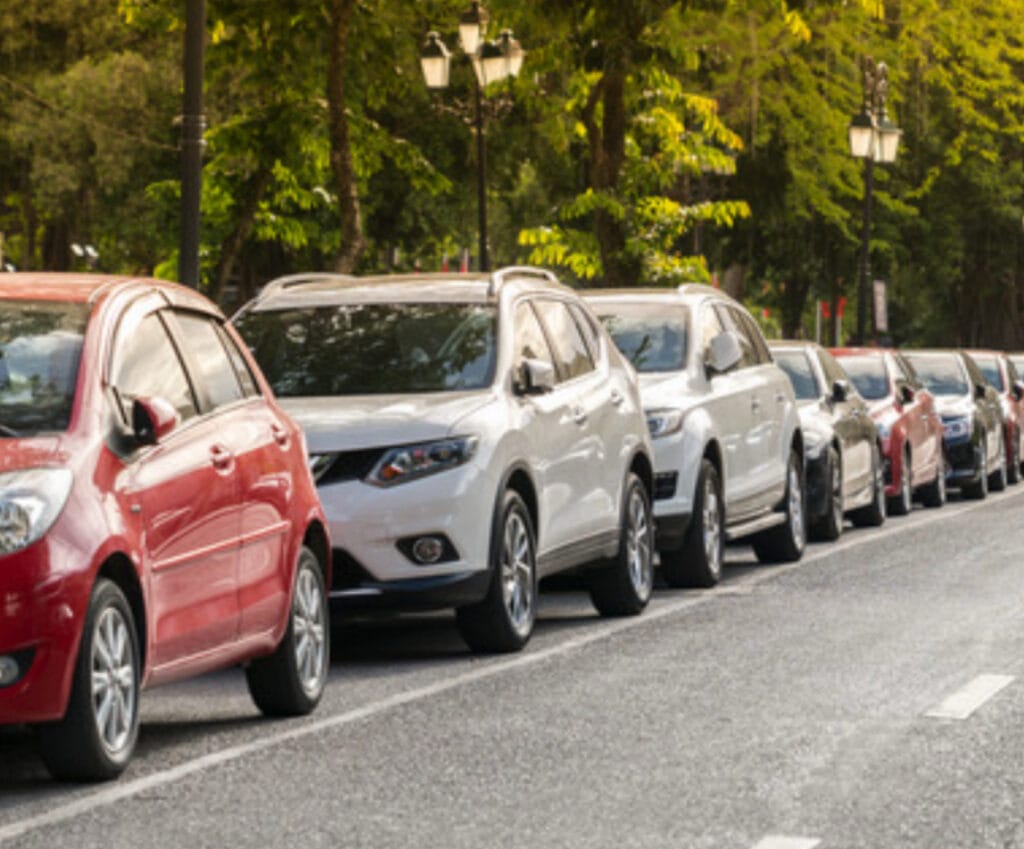
Even without parallel parking on the driving test, Maryland still holds the distinction of being the hardest state in the country to earn a driver’s license.
Last year, FOX5 reported that Maryland and Virginia ranked as the two toughest states to pass a driver’s test, based on a national study conducted by Arizona personal injury law firm Zanes Law. The study analyzed seven different factors to determine which states present the greatest challenges for new drivers.
Those factors included the minimum ages for learner, intermediate, and full-privilege licenses, the ratio of licensed drivers to registered vehicles, the driving population per 1,000 people of driving age, the number of drivers aged 19 and under per 1,000 people, and the required passing score on the written knowledge test.
Maryland ranked first overall, driven in part by one of the most demanding knowledge tests in the country. New drivers must score at least 88 percent to pass the written exam, one of the highest thresholds nationwide. The state also requires drivers to be over 18 years old to obtain a full-privilege license without restrictions or supervision.
“Maryland is known for its dicey weather, traffic congestion and complex roadways which can make driving more challenging,” a Zanes Law representative said to FOX5. “This can explain why the driver’s test is one of the most difficult, as new drivers must feel confident driving in such conditions and demonstrate a comprehensive understanding of the state’s traffic laws.”
Virginia ranked second in the study. Its testing process includes a two-part written exam, with the first section requiring a perfect score to pass and the second requiring an 80 percent score, making it one of the most challenging testing structures in the country.
Maryland’s ranking is particularly notable given a major change to the driving test that took effect just over a decade ago. On May 19, 2015, the Maryland Motor Vehicle Administration announced it was removing parallel parking from the in-vehicle skills test for a Class C non-commercial driver’s license, the most common license issued in the state.
At the time, the MVA said the move was intended to eliminate redundancy in the test. Officials explained that other required maneuvers, such as pulling into and backing out of parking spaces and performing three-point turns, already assessed the same core vehicle-control skills. The agency stressed that parallel parking was not being removed from driver education altogether and encouraged driving schools to continue teaching and practicing the skill.
The driving test continues to include two components: a closed-course portion designed to evaluate basic vehicle control, monitored by a licensing agent outside the vehicle, and an on-road portion, during which the agent rides with the applicant to assess real-world driving ability.
When the ten-year anniversary of the parallel parking change occurred, the topic resurfaced in a recent Jeopardy question, sparking renewed online debate. Many commenters said they were surprised to learn parallel parking is no longer part of the test, while others argued it is not essential for earning a license. A smaller but vocal group countered that they frequently see drivers struggle with parallel parking in urban areas and believe the difficulty is a direct result of its removal from the exam.
Despite that change, the data suggests Maryland’s overall licensing standards remain among the strictest in the country, reinforcing its reputation as the most challenging place in the nation to become a licensed driver.
