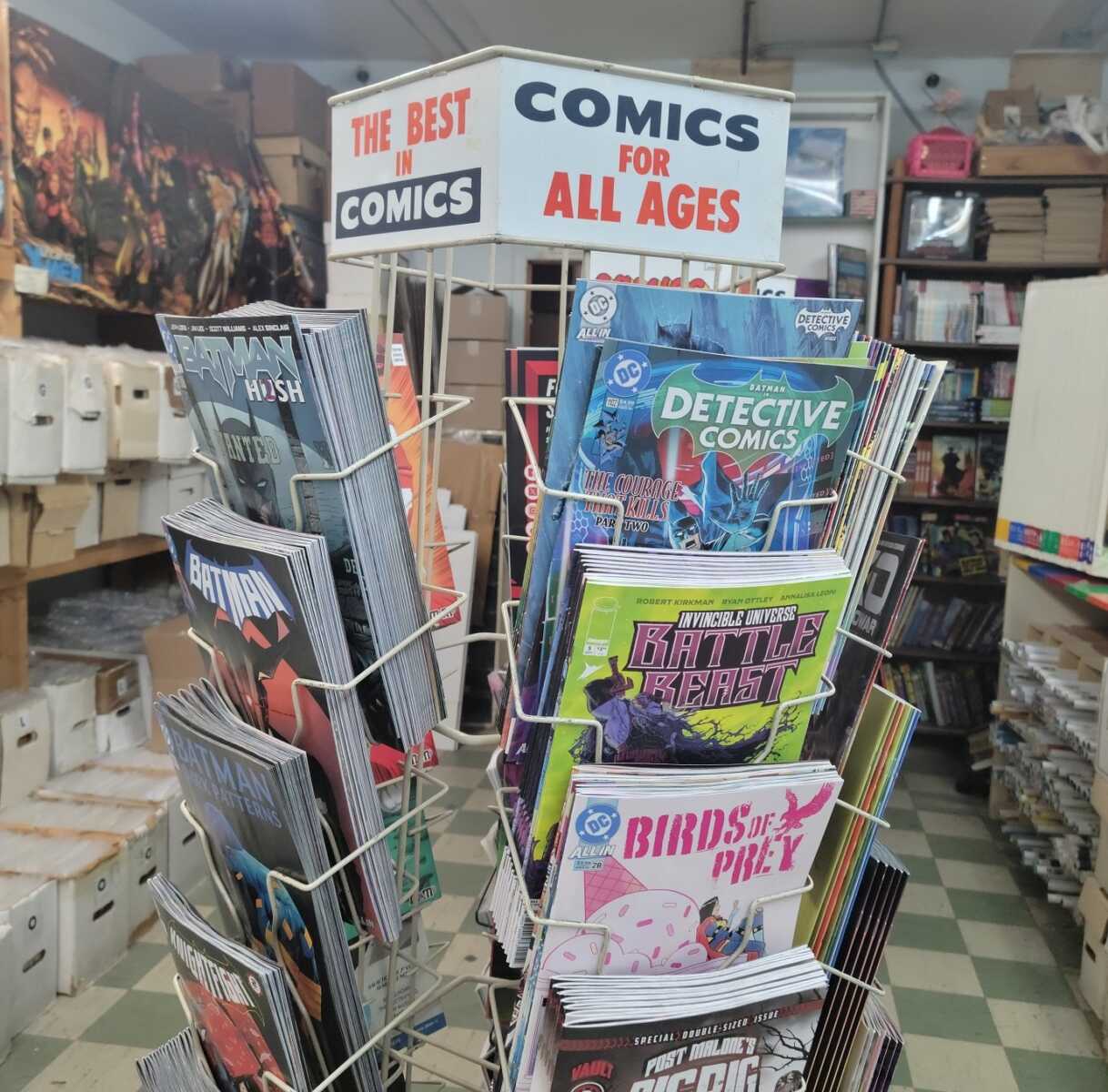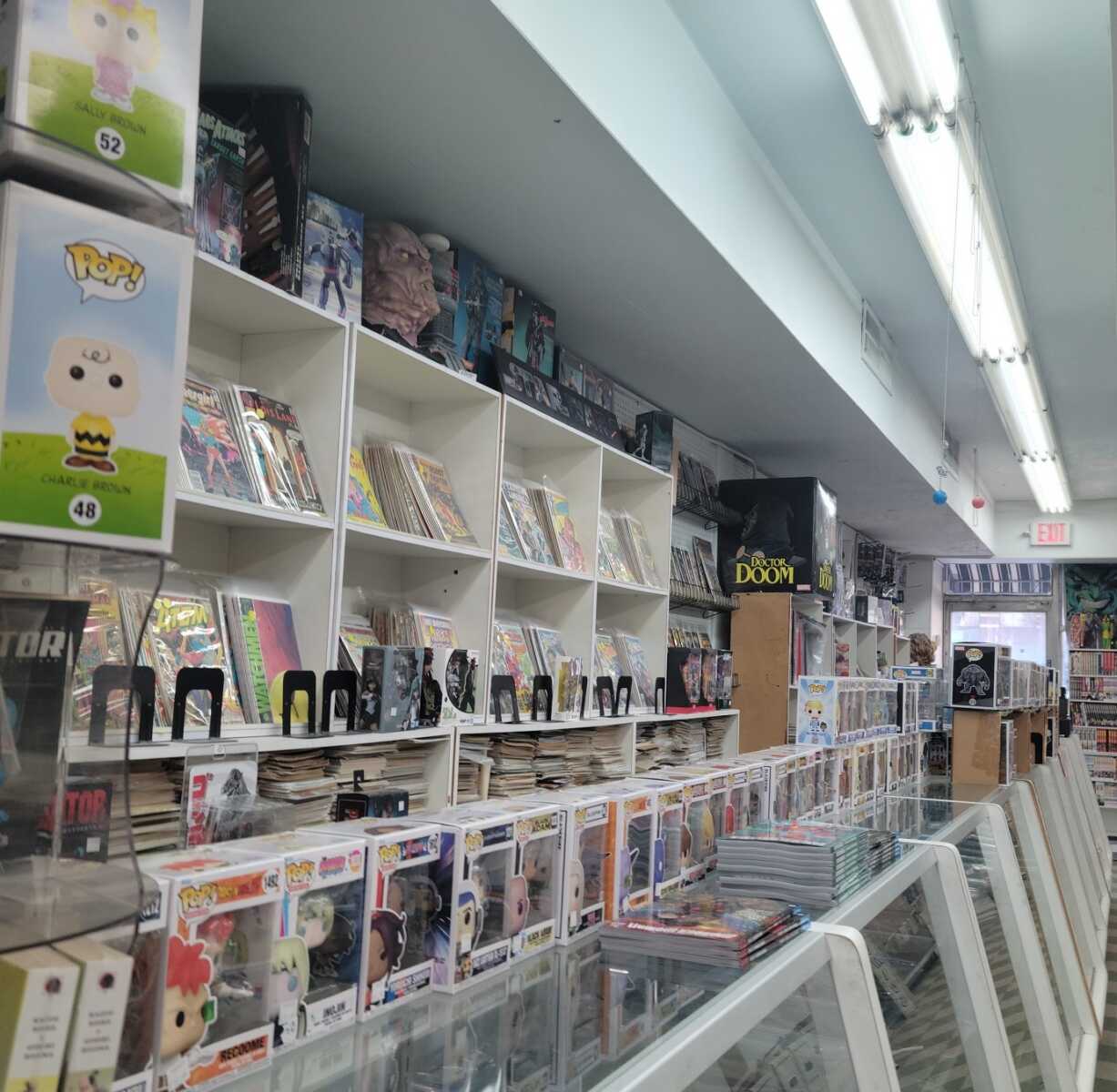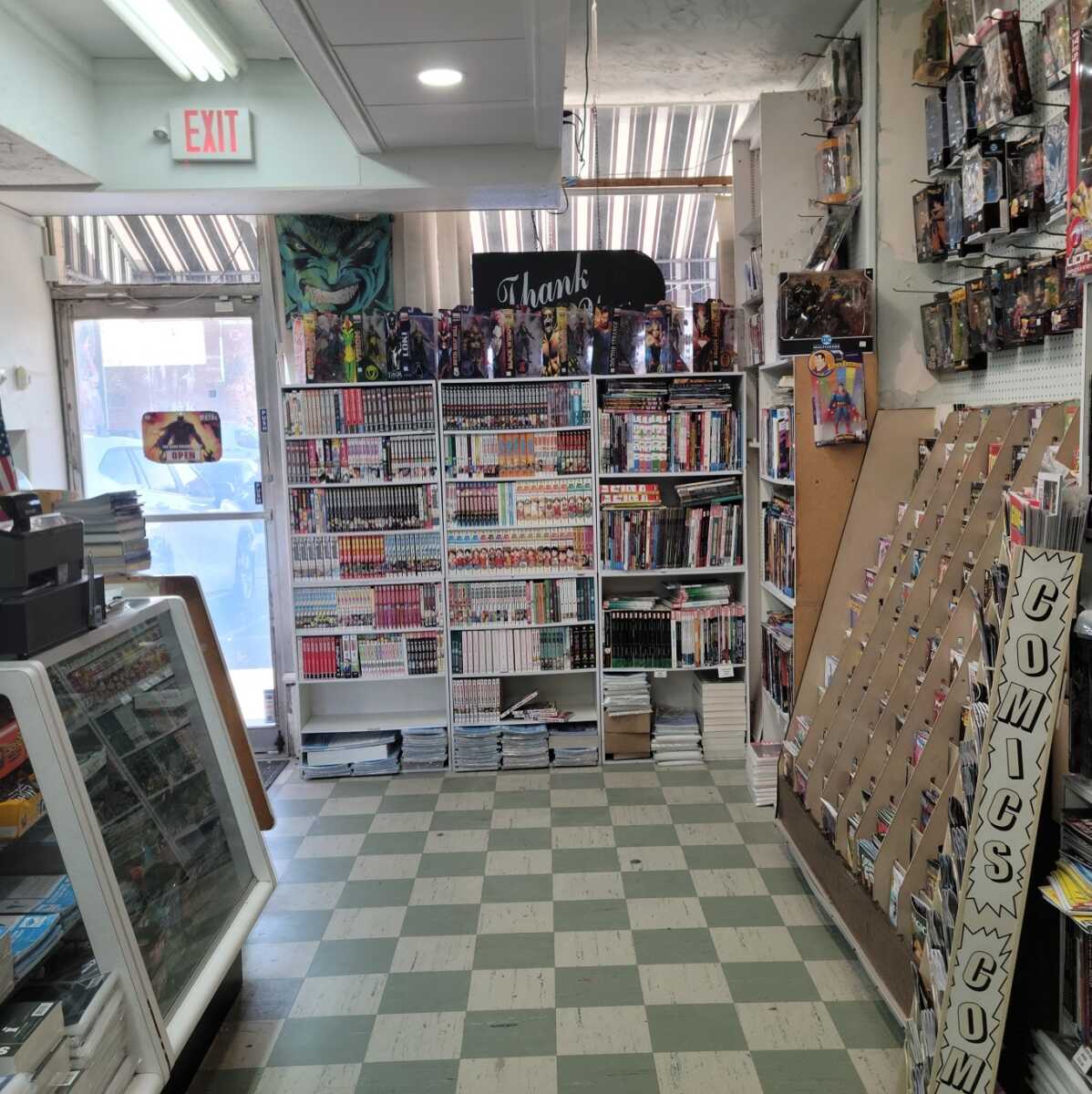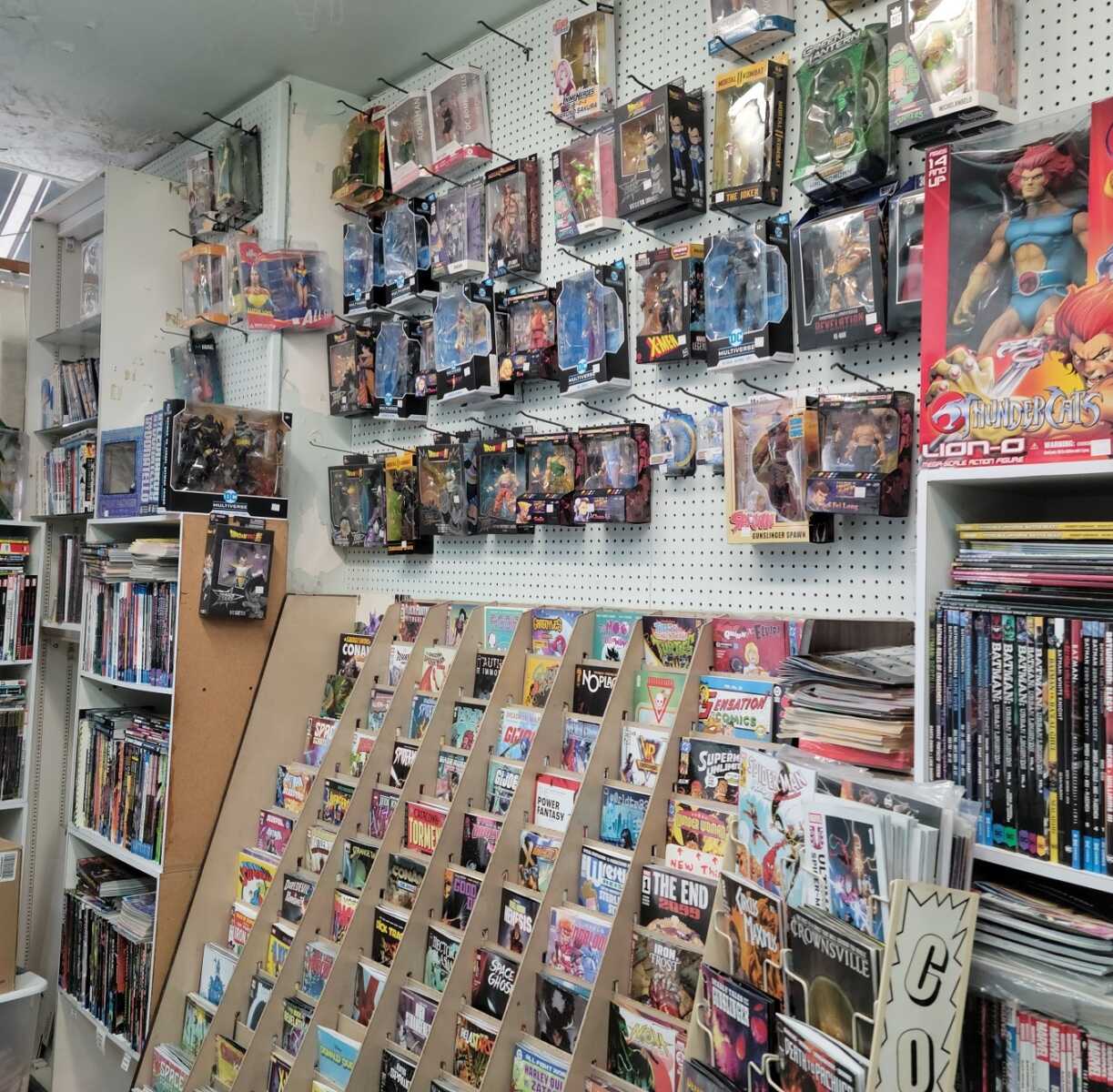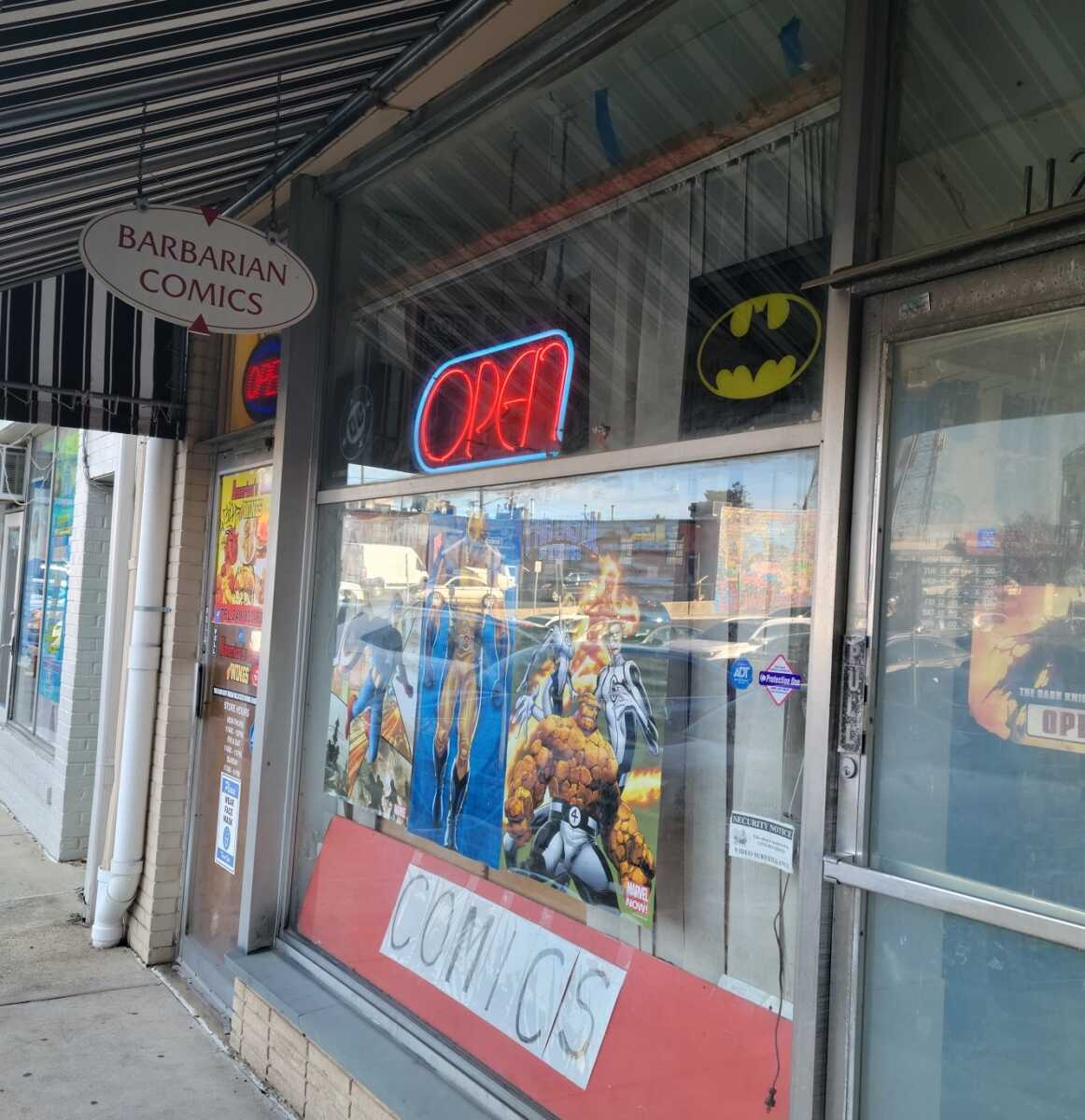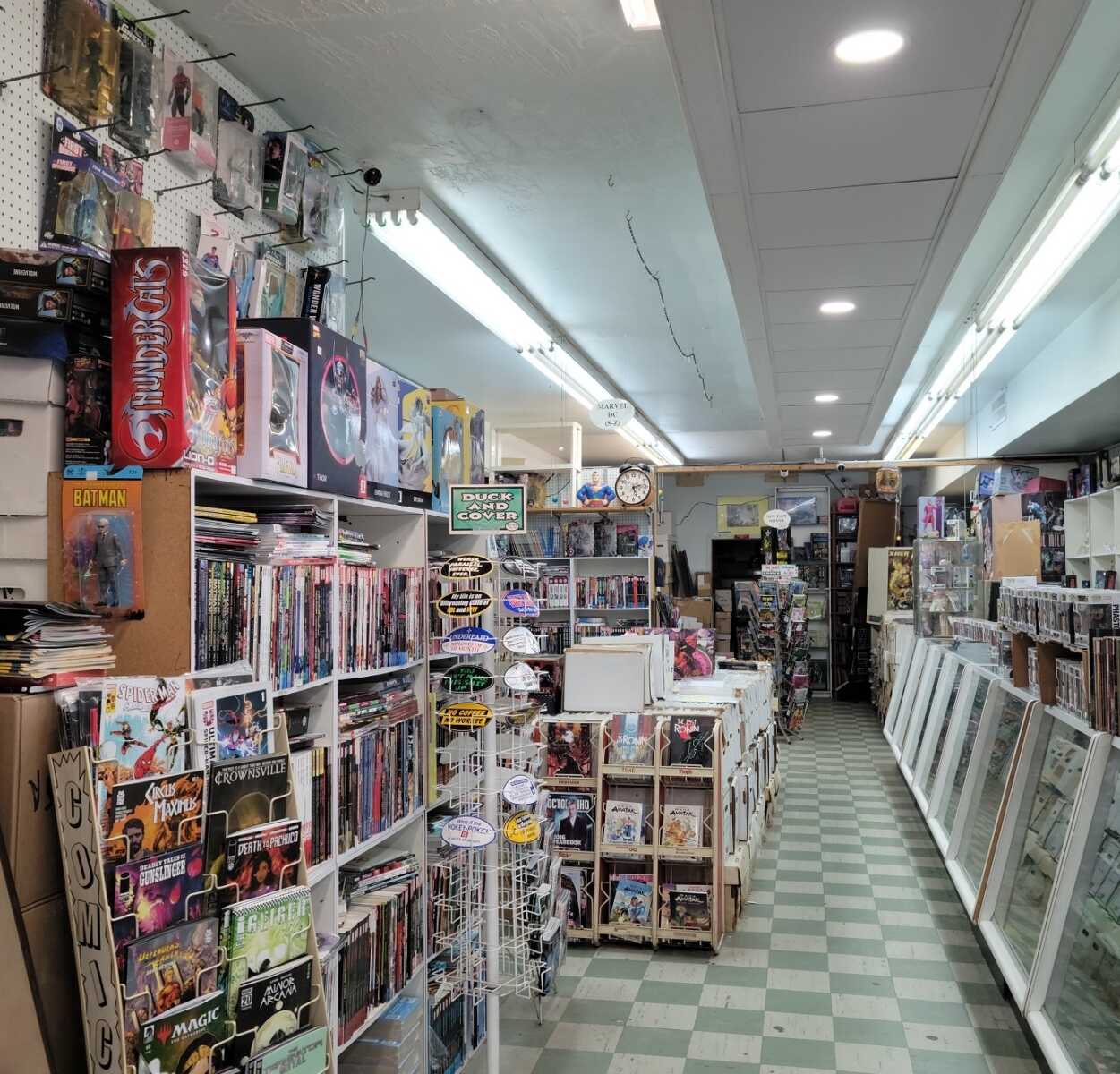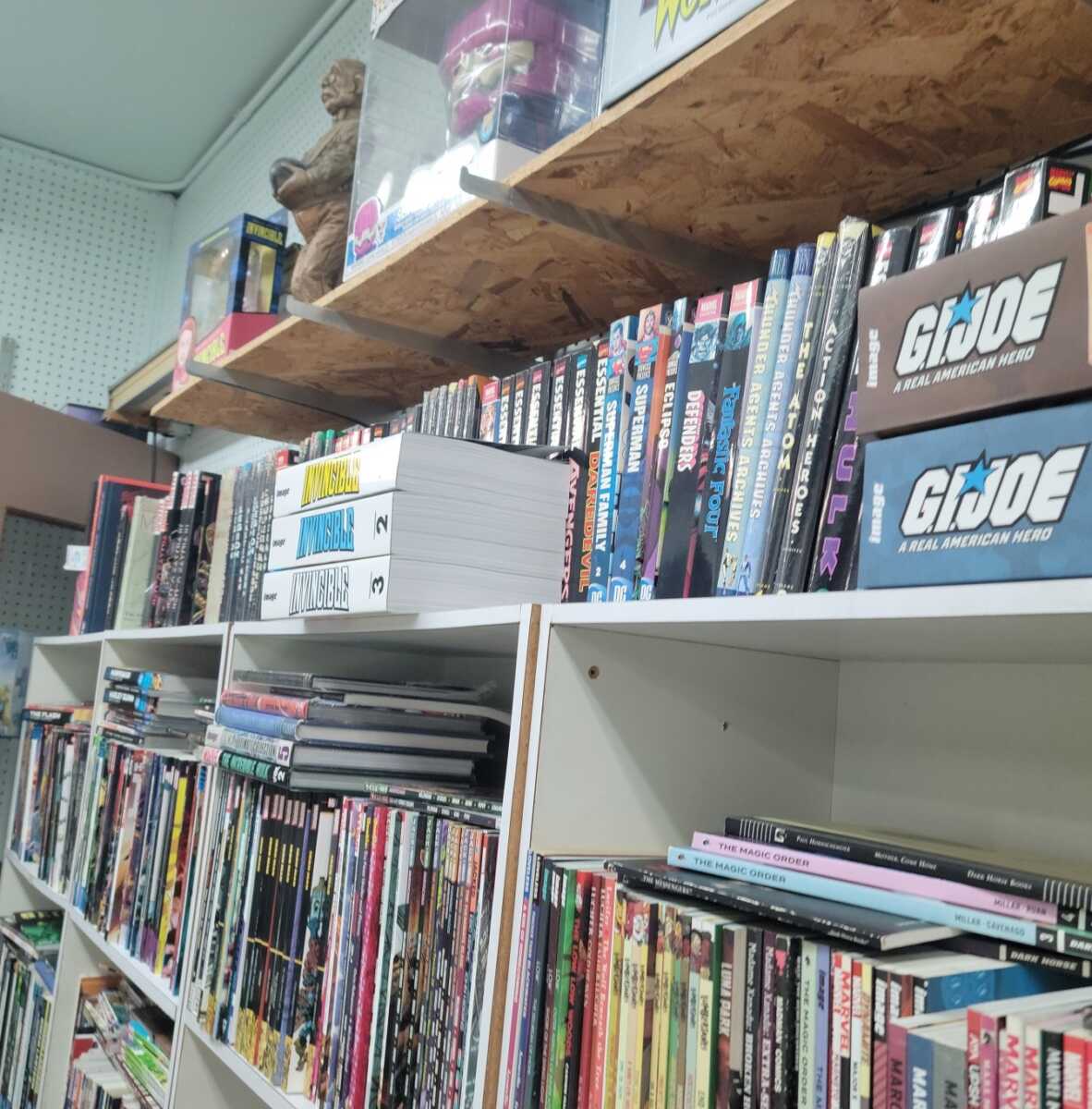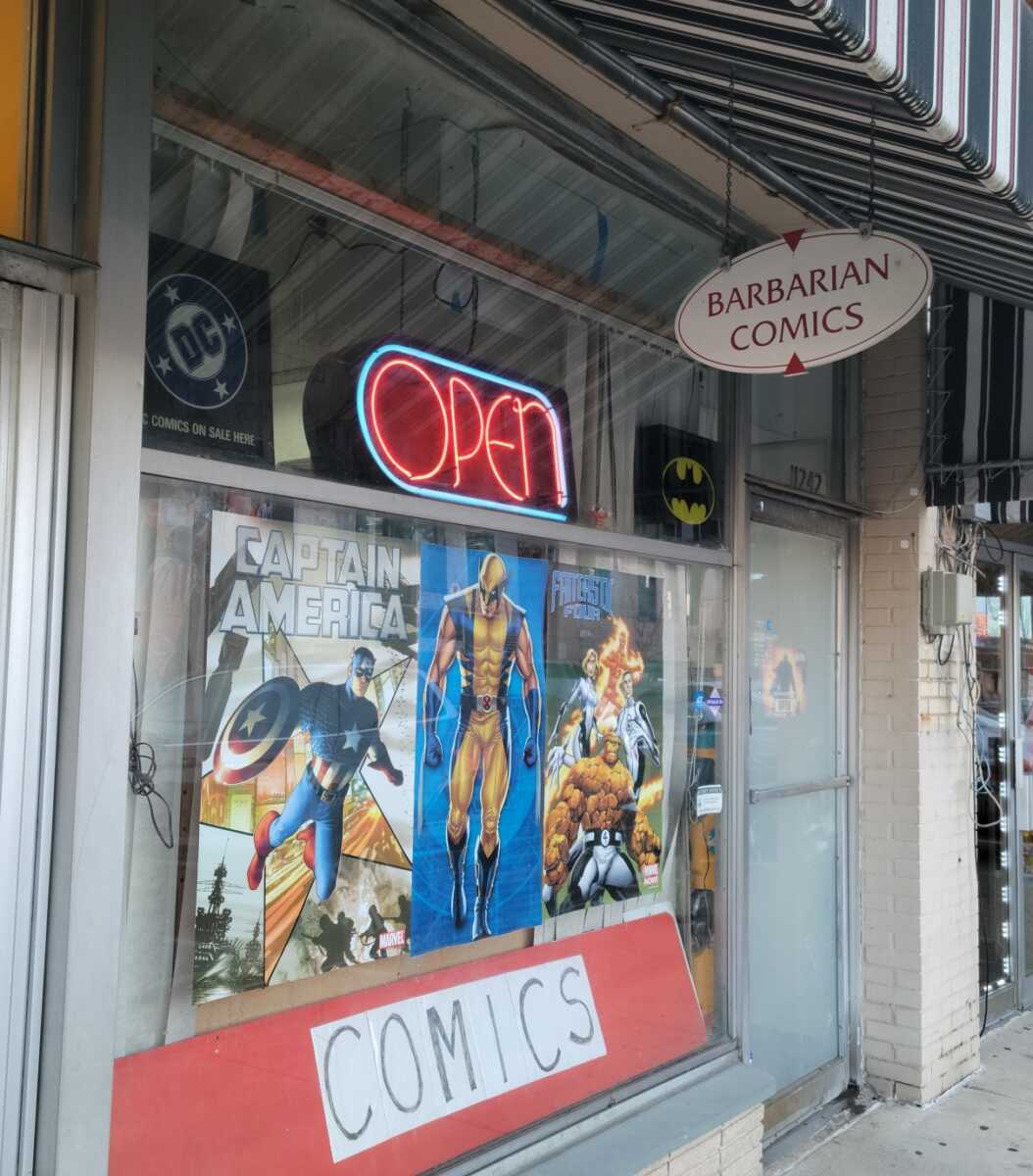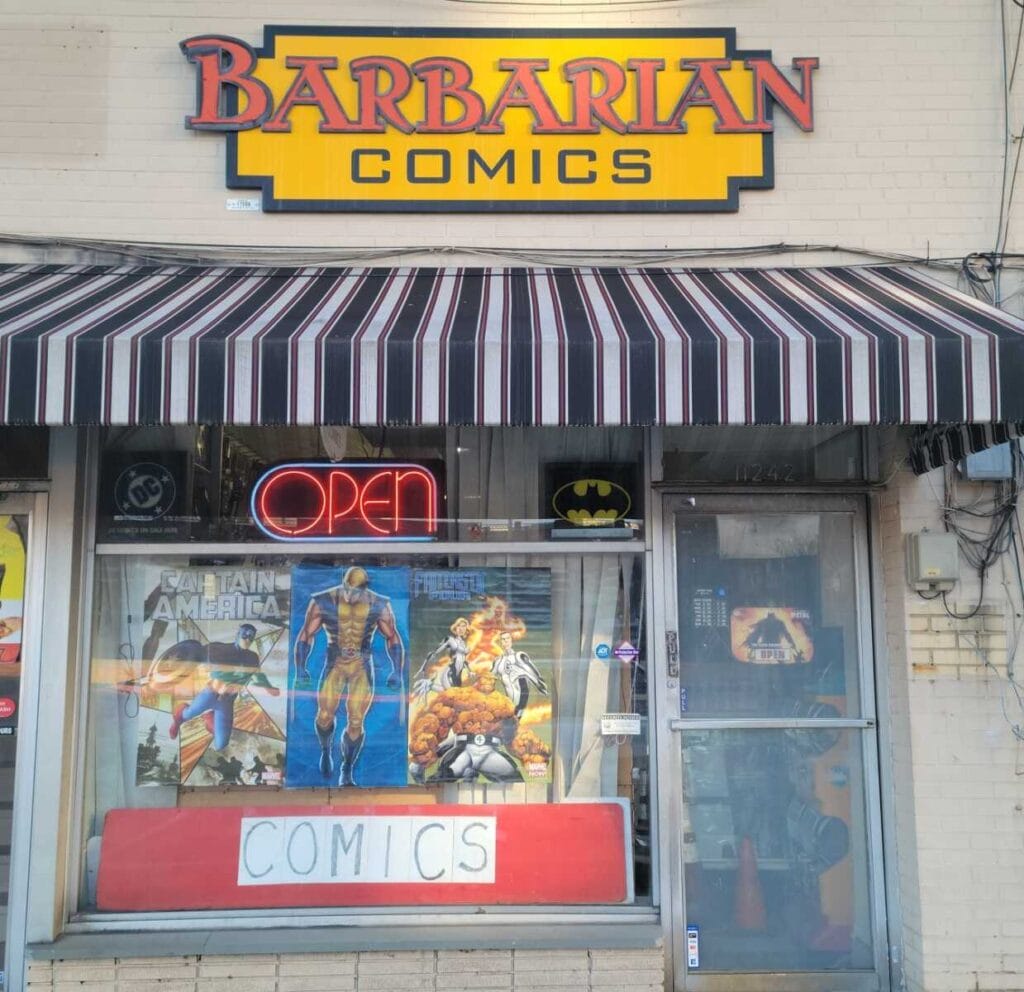
Barbarian Comics (11242 Triangle Ln. Wheaton, MD) has built one of the longest-running and most enduring legacies in Montgomery County, evolving alongside the comic book industry while remaining a constant presence in the Wheaton community for more than five decades (photos below).
The shop’s history dates back to 1969, when it first opened as Bonifant St. Books on Bonifant Street in Silver Spring. The store was founded by Carl Bridgers, his wife Janice, and a business partner. That partner left within the first year, and in 1973, the shop relocated to Wheaton. With the move came a new name, The Barbarian Book Shop, reflecting that it was no longer located on Bonifant Street.
For years, used books made up the bulk of the store’s inventory, with a smaller but growing section dedicated to comic books. As readership shifted and interest in comics increased, the comic section expanded rapidly. In 2003, as the used book market declined alongside the rise of the internet, the shop sold off its used book inventory and transitioned fully into Barbarian Comics, focusing on comic books, toys, and collectibles.
When the shop first opened, the comic book landscape looked very different. Comics were widely available at convenience stores, newsstands, and drugstores, but finding consistent releases or missing issues was often unreliable. There were no dependable ways to track down back issues, and few spaces where fans could meet and talk about their interests. Barbarian Comics filled that void by ensuring readers could reliably follow series and find older comics, while also creating a place for fans to gather. Comic conventions were just beginning to emerge at the time, and none existed in the DC area.
Wheaton was selected as the shop’s home because of its growth potential. The area was densely populated and rapidly developing, with Wheaton Plaza nearby and a cluster of complementary businesses that attracted collectors and readers. Used bookstores and collectible shops helped create a destination for fans, allowing the store to thrive within a growing commercial district.
While the shop has relocated within Wheaton and undergone name changes over the years, it has never closed. Even during the 2020 pandemic, Barbarian Comics continued operating by offering curbside pickup when customers could not enter the store.
Today, Barbarian Comics is believed to be one of the longest continuously operating comic book stores in the country. While the owners acknowledge that new information occasionally surfaces about other stores that may have opened around the same time, they remain confident that Barbarian stands among the oldest still operating without interruption. For them, “continuously open” means readers have always been able to walk in and pick up comics in person.
The current owners, Thomas and James Wu, have deep roots in the store’s history. Both were customers as far back as the 1980s, and Thomas also worked at the shop alongside founder Carl Bridgers. When Bridgers decided to retire in 2003, the Wu brothers were offered the opportunity to purchase the business and carry it forward.
That sense of stewardship comes with responsibility. Customer service has always been a core value, from greeting every person who walks through the door to creating a welcoming environment for first-time visitors and longtime regulars alike. The shop has consistently served as a place where fans can talk comics, movies, television, sports, and pop culture while discovering new interests and filling gaps in their collections.
Over the decades, the comic industry itself has undergone dramatic changes. The rise of the direct market model shifted risk onto retailers, while consolidation under Diamond Comic Distributors reshaped distribution for nearly three decades before its 2025 bankruptcy led to multiple distributors once again entering the market. Comic book grading emerged in the early 2000s, establishing standardized evaluations that significantly impacted pricing and collecting. Meanwhile, movies and television series based on comic properties expanded pop culture awareness, even if they did not always translate into new comic readers.
Barbarian Comics weathered industry highs and lows, including the speculative boom of the 1990s, the collapse that followed, and the pandemic-era surge in collectibles. As markets cooled, the shop adapted by expanding into manga, anime, trading card games, and other products, while remaining cautious and flexible with inventory.
Despite the rise of digital comics and online shopping, the shop continues to draw loyal customers. Many visitors return for the experience itself, the conversations, the sense of fandom, and the thrill of discovering vintage comics, rare magazines, manga, or vintage toys. Multiple generations of families now shop there, with parents who once visited as children returning with their own kids.
As Wheaton Triangle has changed through redevelopment, with smaller specialty shops replaced by chains, offices, and residences, Barbarian Comics has remained a rare constant. Its role in the community extends beyond retail, including participation in events like Free Comic Book Day, which introduces new readers to the medium.
Looking ahead, the owners hope Barbarian Comics continues to be a one-of-a-kind place where people stumble upon unexpected finds, reconnect with memories from their youth, and develop a lifelong appreciation for comics. As they see it, comics are not just about superheroes. They span nearly every genre found in literature and film, from fantasy and science fiction to horror, comedy, romance, and slice-of-life stories.
If the walls could talk, they would tell stories of familiar faces growing up, working behind the counter, moving away, and returning years later with families of their own. Time moves on, but in many ways, life inside Barbarian Comics has remained timeless.