

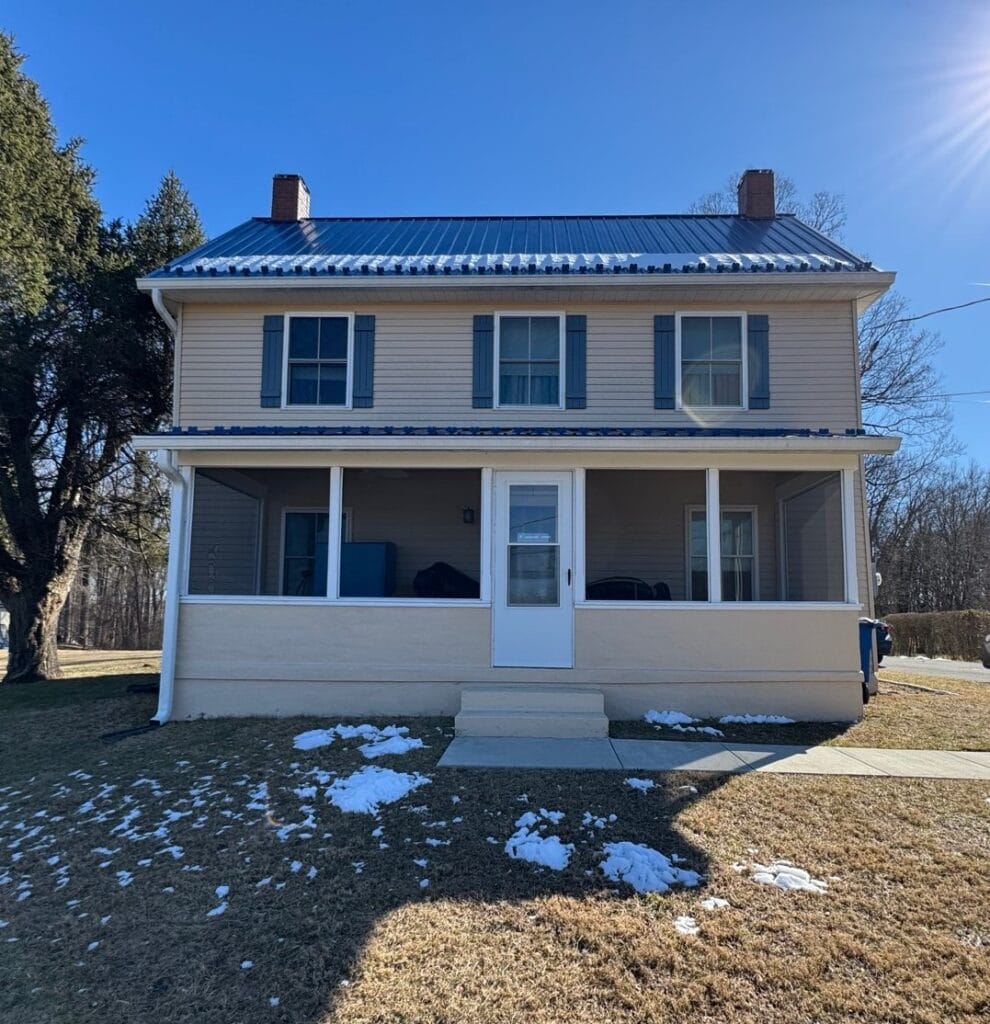
The Montgomery County Council has voted to designate the Rose-Budd House in Sandy Spring as a historic resource, recognizing the century-old home as a symbol of the contributions of some of the county’s earliest Black families to education, community building, and cultural heritage.
Located at 18583 Brooke Road, the home was built around 1912 by Perry Budd and remains one of the few surviving structures tied to the Budd family’s lasting impact on Sandy Spring’s Black community. The designation adds the property to the county’s Master Plan for Historic Preservation following unanimous recommendations from both the Historic Preservation Commission and the Montgomery County Planning Board.
The Budd family has deep roots in Sandy Spring dating back to the early 1800s and were among the founding members of several free Black communities established in the mid-nineteenth century. Over generations, the family played a central role in shaping the area’s educational, religious, and social institutions while contributing to the broader Quaker-influenced community in Sandy Spring.
Perry Budd, who built the home, was a graduate of the Centenary Biblical Institute, now known as Morgan State University. He was a pioneering educator in Montgomery County and served as a trustee of the Sharp Street School, the first school for Black children in the county. Members of the Budd family were also instrumental in founding local churches and supporting educational initiatives.
The Rose-Budd House has remained in the ownership of Budd descendants, including members of the Budd, Riggs, and Rose families, and was nominated for designation at the request of its current owners. The designation report was prepared by the Historic Preservation Division within the Montgomery County Planning Department.
County officials say the designation helps preserve a rare physical link to a historically significant Black middle-class community in Sandy Spring and ensures that the contributions of the Budd family remain part of the county’s story.
Properties added to the Master Plan for Historic Preservation are recognized for their architectural and cultural significance and are protected from demolition. Any exterior changes must be reviewed by the Historic Preservation Commission before permits are issued. Designation can also provide access to guidance on preservation and potential tax benefits for property owners.
