Glenmont

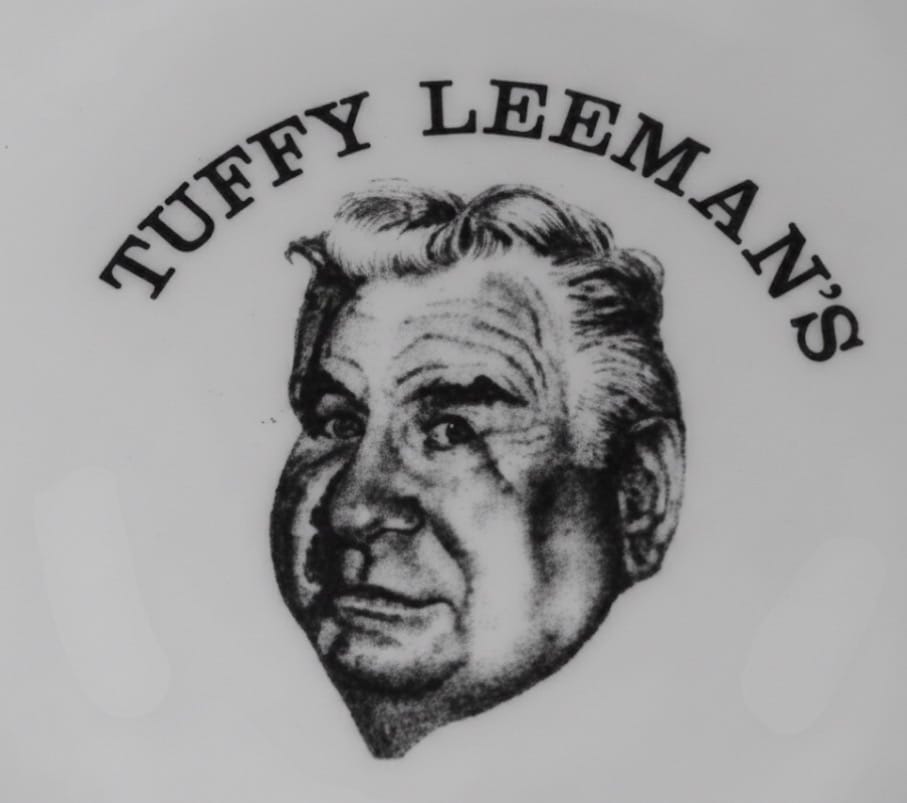
Tuffy Leemans played in the NFL from 1936-1943. In his rookie season, he led the league in rushing and was named an All-Pro.

In 1978, Alphonse “Tuffy” Leemans was inducted to the NFL Hall of Fame for his time with the New York Giants. At that point, he hadn’t just achieved one of the highest honors in the NFL… he had also become a local legend among Duckpin Bowlers in Montgomery County.


Arts

“Remember that guy that used to paint at Rio?” We sure do. If you ever walked through Rio between 2000-2016, you probably spotted George Petridis working on one of his beautiful paintings with a lot of his other artwork on display in the atrium of Rio just outside of the movie theater. For over 15 years, Petridis displayed his art and worked on new pieces surrounded by the bustle of the Rio crowd– often interacting with those who stopped to enjoy some of the work he had on display.

You’d be surprised to learn that Petridis didn’t actually live in MoCo, though he spent much of his time here while his art was on display at Rio. He was born and raised in Athens, Greece and didn’t pick up art until later in life while he was looking to become a cardiologist and fell in love with the daughter of a prominent artist in Belgium, who introduced him to painting. After participating in a show in Paris, he decided his passion would become his career and he joined his brother in Toronto, Canada.


Glenmont

These are a couple quotes from people who commented on a picture of the Glenmont Arcade sign on when we posted it last week on Instagram. Despite its name, this wasn’t a gaming arcade. Originally built in 1952, the Arcade was a mini mall inside a strip mall. 11 store fronts were open for “one-person businesses.”

A number of local businesses have opened and closed in the Glenmont Shopping Center. In 1957, a 24-lane bowling alley, Tuffy Leemans, first appeared at the strip mall located in the basement of the arcade and stayed open until 2002. There, you could find multiple pinball games, which many believed was the reason for the “arcade” name. Later on, arcade games were brought in, but that was long after the sign and name came about.


Gaithersburg

Tired of Dodging Potholes on Your Street? You Can Ask MoCo to Fix Them!

Many of us are familiar with the stark and sudden feeling of horror that can come after speeding through an unexpected pothole. Crunch! Some might liken it to stubbing your toe in the night when you’re stumbling into the dark towards your kitchen for a midnight snack…only, the pothole might feel just a bit more painful, and potentially much more expensive.


MoCo History

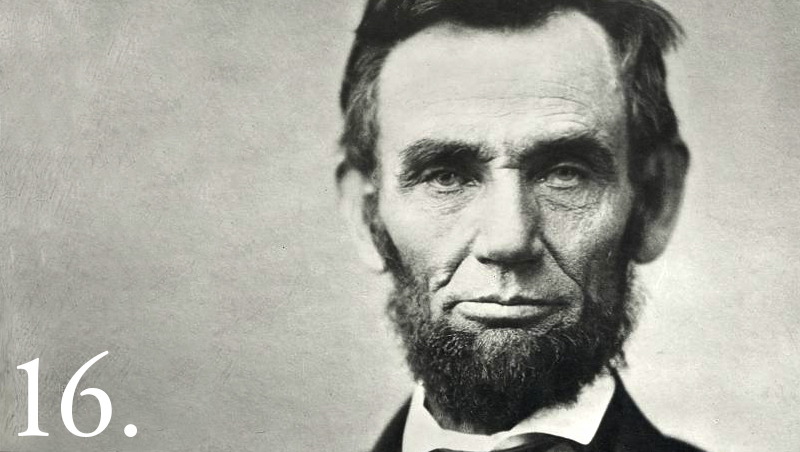
Did Abraham Lincoln spend time at Silver Spring Mansion with the Blairs?

Lincoln and the Blairs were close. The Blairs already had a strong family friendship with the Lincolns in Kentucky. Francis Preston Blair Sr. had advised U.S. presidents before Lincoln, which means that Lincoln and Blair Sr. would most likely have had at least a close work relationship. The two families were clearly political allies since Lincoln made Montgomery Blair, Blair Sr.’s son, the administration’s postmaster general.


Gaithersburg

Many of you may have spent a sun-splashed day roaming the 18.3-acre grounds of Nike Missile Park in Gaithersburg near Snouffer School Road. However, this site was not always the lovely green space that we see today – and the “Nike” is not referring to the Swoosh we’re all familiar with. Project Nike was an anti-aircraft missile initiative that traces its roots back to 1944, when the U.S. Department of War (now the Department of Defense) tasked its scientists and engineers to develop a widespread anti-aircraft missile system. During the Cold War, tensions were at a fever pitch, and the U.S. military sought to ensure that the nation was protected in the event of an attack.

Previously known as Site W-94 in the Washington-Baltimore Defense Area (BA, W), the Gaithersburg site was one of several Nike facilities across the capital region equipped with anti-aircraft infrastructure for use in the case of airborne attacks. The site was equipped with the Nike Ajax (MIM-3) missile systems, which were the main foundation of the Nike program until the mid-1960s. Once the technology advanced past the Ajax’s point, the Gaithersburg Nike Missile site was deactivated and demolished, with the core site being transferred to the National Park Service and the surrounding areas developed into residential lots. In 1997, the National Park Service then transferred the site to the Maryland-National Capital Park Planning Commission (M-NCPPC), at which point we gained the Nike Missile Park that we know today.


Beyond MoCo

By Alicia Clanton

When the regional nickname “the DMV” rose to popularity in the 2000s, locals jumped on it. Once obscure, it can now be heard in daily conversation or on the radio and news. It appears in several of locally grown rapper Wale’s tracks, and Nicki Minaj gave it a shoutout in her song Beez in the Trap. You might also find it in the Twitter or Instagram bio of a person who wants to show off their local roots. But where did this nickname come from, and who is officially a part of the DMV? Why does it have such a hold over the region?


Arts

O.A.R. Embraces Their Rockville Roots

It was 2014 and the band O.A.R. was releasing its eighth studio album. After becoming an international success and touring all around the world it seemed fitting to go back to where they started and name their album “The Rockville LP,” after their hometown in Montgomery County, MD.


View More Stories