

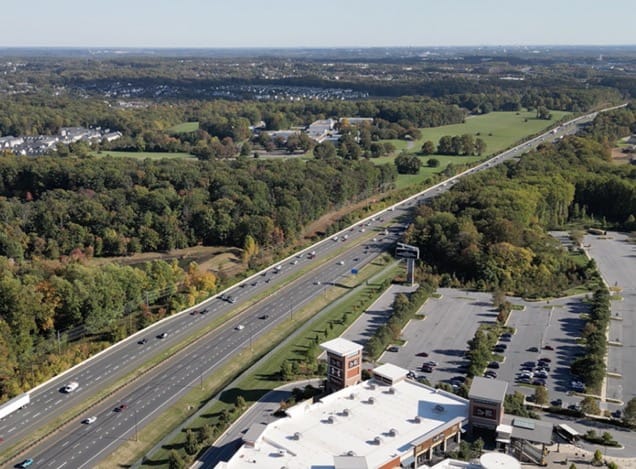
The Montgomery County Planning Board has approved the Scope of Work for a new transportation study that will examine how people travel between Clarksburg and Montgomery Village and whether the area’s road network can handle future growth.
The study follows the recent update to the Master Plan of Highways and Transitways, which removed the long-debated northern extension of Midcounty Highway Extended (M-83). With that project no longer moving forward, county leaders are now taking a broader look at how to address transportation needs across the corridor.
Funded through a special appropriation in the Fiscal Year 2026 budget, the effort will evaluate whether existing and planned infrastructure can support continued development in Clarksburg, Germantown, and Montgomery Village. It will also explore potential improvements and alternative solutions.
The study area spans from Shady Grove Road in the south to Clarksburg Road and Stringtown Road in the north, and from I-270 east to the Brink Road, Wightman Road, Snouffer School Road, and Muncaster Mill Road corridor. While I-270 will be reviewed at a high level, more detailed traffic analysis in areas like Clarksburg Gateway and the Germantown Sector Plan Amendment will be handled through those separate planning efforts.
Planners will take a data-driven approach, looking at current conditions and projecting transportation needs through 2045. The work will include collecting traffic data, analyzing safety, evaluating peak-hour capacity, and measuring whether the system can accommodate future demand. The study will also develop and compare different infrastructure options.
The effort will incorporate recommendations from previous planning work, including projects identified in the 2017 Midcounty Corridor Study Supplemental Report.
Following that analysis, the Montgomery County Department of Transportation will assess how feasible those improvements are, including costs, potential environmental and community impacts, and how long each project could take to implement.
Public input will be a key part of the process, with two community meetings planned over the next year, one this fall and another in winter 2026-2027. The full study is expected to take about a year to complete, with final recommendations scheduled to be presented to the Planning Board in spring 2027.
