


The information in this investigative update is preliminary and will be supplemented or corrected during the course of the investigation.
The National Transportation Safety Board (NTSB) has issued an investigative update for its ongoing investigation of the March 26 contact of containership Dali with the Francis Scott Key Bridge and subsequent bridge collapse. It can be seen below:
“This report provides an update to the NTSB’s preliminary report issued on May 14, 2024, concerning the March 26, 2024, contact of the containership Dali with the Francis Scott Key Bridge in Baltimore, Maryland, and the subsequent collapse of the Key Bridge. Investigative activities have continued since the preliminary report was issued.
NTSB investigators have completed in-person interviews of the vessel’s crew. Onboard examination of engineering systems and testing of electrical systems has been completed. Documentation of the damage to the vessel structure is ongoing.
During the accident voyage, electrical breakers HR1 and LR1 unexpectedly opened when the vessel was three ship lengths from the Key Bridge, causing the first blackout (loss of electrical power) to all shipboard lighting and most equipment. While examining and testing the vessel’s electrical power distribution system and control circuitry, NTSB investigators (in coordination with vessel crew and parties to the investigation) noted an interruption in the control circuit for HR1’s undervoltage release.[1]
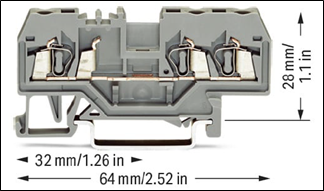
Exemplar terminal block identical to model removed from ship. (Source: WAGO)
NTSB investigators subsequently removed an electrical component (a terminal block; see figure) from the control circuit for HR1’s undervoltage release.[2] Two portions of control wiring associated with the terminal block were also removed. We continue to examine the removed components at the NTSB Materials Laboratory. We will continue to evaluate the design and operation of the vessel’s electrical power distribution system, and investigate all aspects of the accident to determine the probable cause and identify potential safety recommendations.”
Information and Photo courtesy of NTSB