

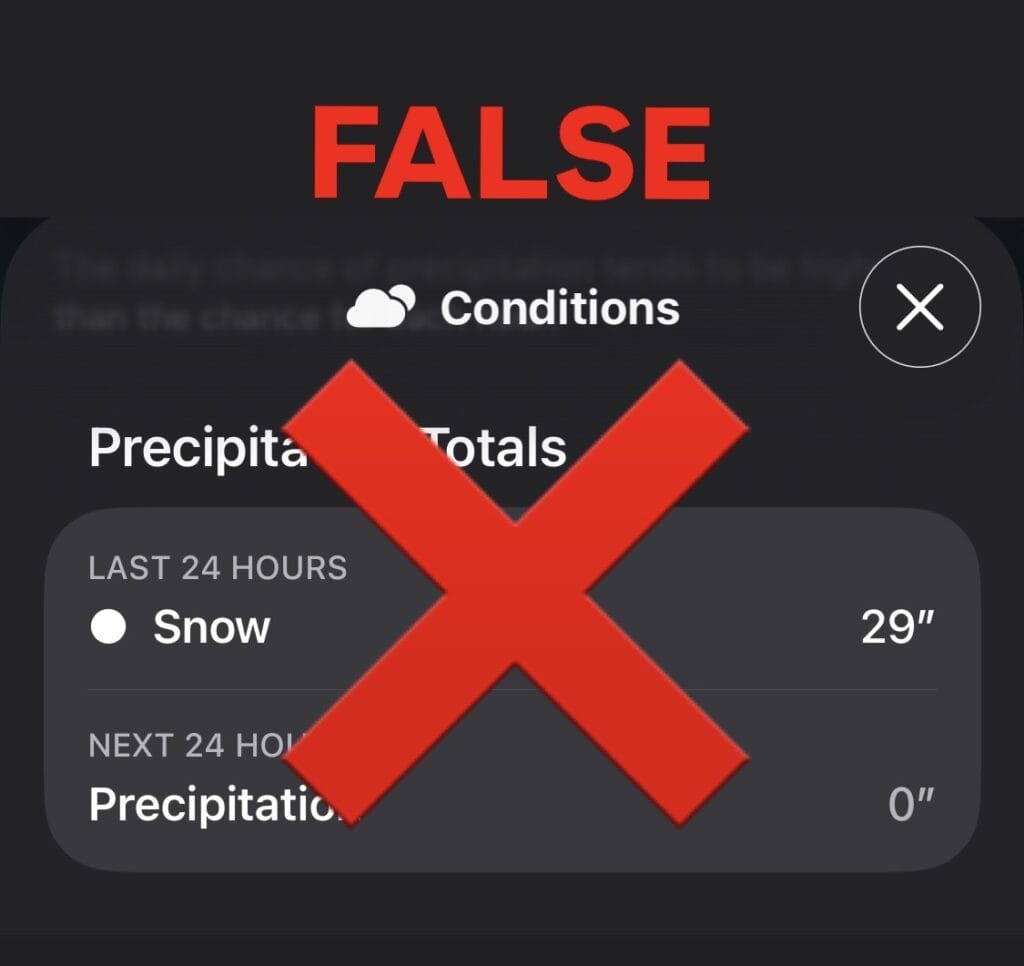
Baltimore FOX45 meteorologist Gerard Jebaily is calling out Apple and its weather app after it repeatedly forecast more than 20 inches of snow in the days leading up to this weekend’s winter storm, then appeared to significantly overstate snowfall totals after the storm ended.
In a post on social media, Jebaily wrote, “WOW! This is embarrassing. Did you see this on your phone this week? The Apple weather app was predicting over 20” of snow just one day before our storm! Not only was it INCREDIBLY wrong, but it is trying to say IT HAPPENED!?”
In a subsequent post, Jebaily escalated his criticism, writing, “Apple you caused a weather panic in our city and now everybody is quite mad about it. Residents for the bad info, Meteorologists for being falsely associated with it, and worse, it is not even showing what actually happened. This needs fixing NOW!”
Throughout the week, the Apple Weather app displayed snowfall totals that far exceeded official forecasts, at times suggesting more than two feet of snow across parts of Maryland. By contrast, the National Weather Service and most local television stations consistently shared much more realistic projections that were closer to what ultimately fell.
In Montgomery County, snowfall totals generally ranged from 5 to 10 inches across most of the county, with the National Weather Service reporting a high-end total of 11.8 inches in Clarksburg. However, shortly after midnight on Monday, at approximately 12:15am, the Apple Weather app showed that 29 inches of precipitation had fallen in Gaithersburg. That figure is not accurate and far exceeds any confirmed snowfall or precipitation totals reported by official sources.
The discrepancy fueled confusion and frustration among residents, with some directing their anger toward local meteorologists. Several accused forecasters of predicting “two feet of snow,” despite those numbers largely originating from automated app forecasts rather than human-generated forecasts from local stations or the National Weather Service.
Meteorologists have long warned that automated weather apps can struggle with complex winter storms, particularly when precipitation types shift between snow, sleet, and rain. Without human interpretation, model-driven forecasts and totals can fluctuate wildly and present misleading information.
